
People often ask whether they can report drone over property concerns when a device appears above a yard, roof, or backyard. The short answer is yes, in some situations you can report it, but whether action will be taken depends on how the drone is being used, where you live, and whether the operator is breaking any laws or regulations. If a drone is flying low over your home, repeatedly hovering nearby, or capturing images where privacy should be expected, it may be worth documenting the activity and contacting the proper authorities.
Table of Contents
- Understanding your rights when a drone appears overhead
- When to report drone over property concerns
- Who you can report a drone to
- What information to collect before making a report
- Privacy concerns and why they matter
- Safety concerns are just as important
- What not to do if a drone is over your property
- How to handle a one-time incident versus repeated harassment
- Practical steps for protecting your property
- Final thoughts
Understanding your rights when a drone appears overhead
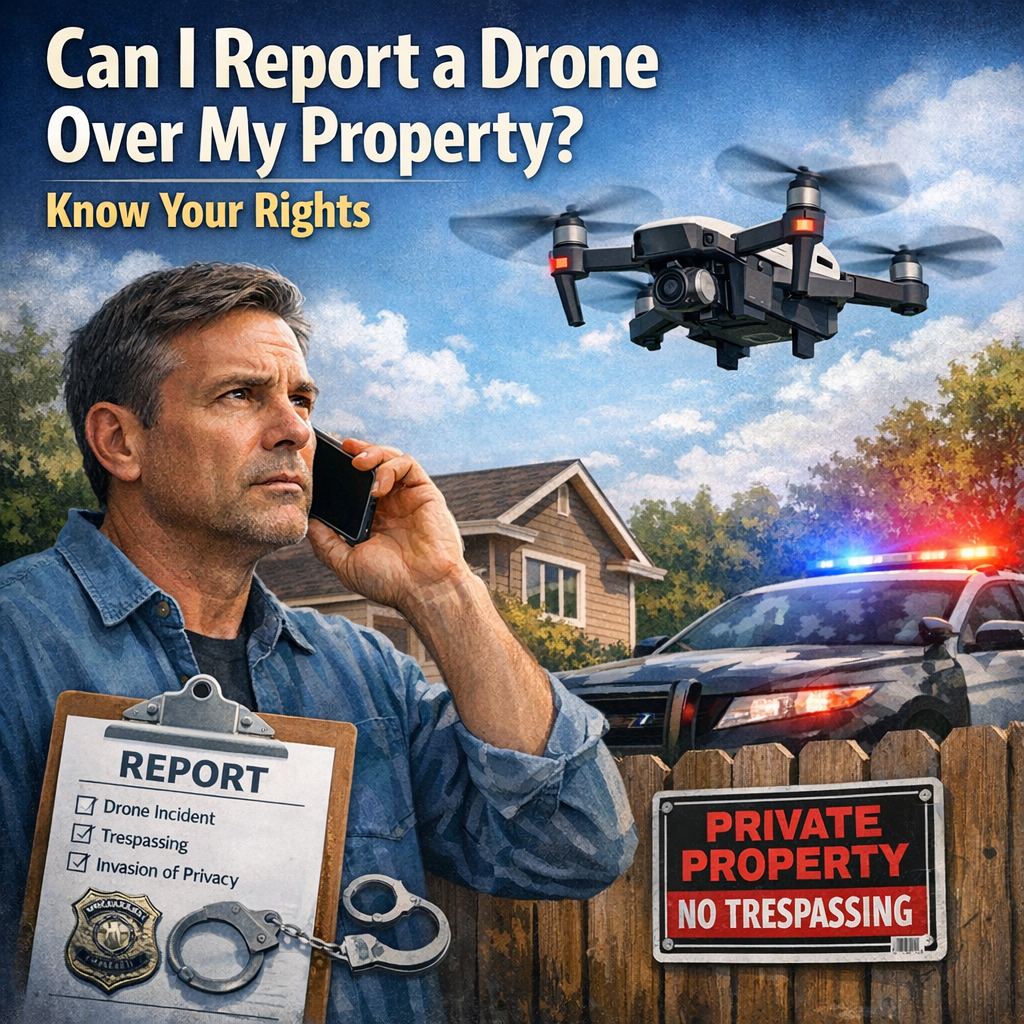
A drone flying above your property does not automatically mean someone is breaking the law. In many places, the airspace above private land is not fully owned in the same way the ground is. That means a drone may legally pass overhead if it is operating within the rules set by aviation authorities and local laws.
However, that does not give someone unlimited freedom to use a drone in a way that invades privacy, creates a safety hazard, or causes repeated disturbance. The key question is not simply whether the drone was present, but whether it was flying too low, lingering too long, or being used in a way that violates applicable rules. For a helpful overview of flight limits, see our guide to Drone Altitude Limits: FAA Rules Explained.
In the United States, the FAA publishes basic drone rules and safety guidance on its official website at FAA UAS resources. Local privacy and nuisance laws may also apply, so it is often worth checking both federal guidance and your local ordinances.
What usually matters most
Authorities typically look at a few factors:
- How low the drone was flying
- Whether it was directly over private property or merely passing nearby
- Whether the operator was trespassing
- Whether the drone was filming, photographing, or spying
- Whether the flight was reckless or unsafe
- Whether local privacy or nuisance laws were violated
If the drone seemed to be inspecting your backyard, looking into windows, or circling repeatedly without an obvious reason, that may strengthen your case for making a report.
When to report drone over property concerns
Not every drone sighting requires action. In fact, many drone operators are hobbyists following the rules, using drones for photography, surveying, or recreation. But there are situations where reporting the incident is reasonable and potentially necessary. If you are unsure whether the flight is legal, it can help to read more about Drone in Backyard: Is It Legal to Fly a Drone at Home?.
In many cases, the decision to report drone over property concerns comes down to whether the flight is isolated, careless, invasive, or repeated.
Possible reasons to file a complaint
You may want to report a drone if it:
- Flies at an unsafe altitude near people, pets, or buildings
- Hovers over your yard for extended periods
- Appears to be filming or photographing private activity
- Causes harassment or feels intentionally targeted
- Interferes with your ability to use your property peacefully
- Enters restricted airspace or violates local regulations
- Appears to be operated by someone who is careless, intoxicated, or malicious
If the drone is only briefly passing overhead and not creating a privacy or safety issue, reporting it may not lead to much action. But persistent or suspicious behavior is different.
Who you can report a drone to
The right place to report a drone depends on the nature of the problem. Different agencies handle different concerns, and knowing where to go can save time.
Local police
If the drone is being used to harass you, spy on you, or trespass in a way that violates local law, the police may be the best first contact. This is especially true if you believe the operator is nearby and can be identified.
Police may be able to:
- Take a report
- Investigate possible trespassing or harassment
- Check for local ordinance violations
- Speak with the operator if they are found nearby
Aviation authorities
If the issue involves unsafe or unlawful flight, aviation regulators may be the proper authority. In the United States, for example, the Federal Aviation Administration handles many drone safety and airspace rules. Other countries have equivalent agencies.
You might report a drone to an aviation authority if it:
- Flies in restricted airspace
- Operates dangerously near airports
- Violates altitude limits
- Creates a serious hazard to aircraft or people
Property management or neighborhood associations
If you live in a managed community, an HOA or property manager may have rules about nuisance behavior, privacy, or drone use on common areas. They may not be able to stop every flight, but they can sometimes address repeated issues.
Wildlife or park authorities
If the drone is being flown in a protected area, nature preserve, or restricted public space, a parks department or environmental agency may have jurisdiction.
What information to collect before making a report
If you plan to report a drone, good documentation can make a big difference. A vague complaint is harder to act on than a clear record of what happened.
Helpful details to note
Try to record:
- Date and time of each incident
- Location of the drone relative to your property
- How long it stayed nearby
- Estimated height, if possible
- Direction of flight
- Whether it was hovering, circling, or following movement
- Any sound it made
- Whether the operator was visible
- Whether the drone appeared to be recording
- Any witnesses who saw the same thing
Evidence you can gather safely
If possible, you can also:
- Take photos or videos from a safe place
- Save security camera footage
- Keep a written log of repeated incidents
- Note any identifying marks, lights, or colors on the drone
- Preserve messages or online posts if the operator admits to using the drone
Do not try to grab, damage, or interfere with the drone. That can create legal trouble for you and may also be dangerous.
Privacy concerns and why they matter
One of the most common reasons people worry about drones over their property is privacy. Even if the drone is technically allowed to be in the airspace, using it to peek into private areas can cross the line.
For homeowners who want to reduce exposure, thoughtful property design can help. Privacy fencing, landscaping, and covered outdoor spaces can make it harder for a drone to capture sensitive activity, and they can also support your case if you later need to report drone over property behavior that seems invasive.
Examples of privacy-related concerns
A report may be appropriate if the drone is:
- Hovering near windows
- Filming in a fenced backyard
- Capturing images of people using a pool or patio
- Repeatedly circling a home without permission
- Using a camera in a way that feels targeted or invasive
Some regions have specific laws about voyeurism, stalking, or unlawful surveillance. In those cases, the drone itself may not be the issue so much as how it is being used.
Safety concerns are just as important
Drones can also become a safety problem. Even a small device can injure someone or damage property if it crashes.
If you want to understand how long a drone can stay airborne before it becomes a nuisance or hazard, read our article on Drone Flight Time: How Long Can a Drone Typically Fly?. Flight time matters because longer flights may also mean longer hovering, greater battery risk, and more chances for an unsafe landing.
Potential safety risks
A drone becomes more concerning when it:
- Flies close to children, pets, or gatherings
- Operates near power lines or roadways
- Comes too close to roofs, trees, or vehicles
- Appears to be losing control
- Is flown at night without proper lights
- Interferes with emergency activity
If you think a drone flight could put people in danger, reporting it promptly is a smart step.
What not to do if a drone is over your property
It can be tempting to react immediately, especially if you feel watched. But certain actions can make things worse.
Avoid these mistakes
Do not:
- Throw objects at the drone
- Shoot it down
- Shine powerful lasers at it
- Attempt to jam its signal
- Trespass to confront the operator
- Damage equipment if you find it on the ground
These actions can violate criminal, civil, or aviation laws. The safest and most effective approach is to document the incident and use proper reporting channels.
How to handle a one-time incident versus repeated harassment
A single drone sighting may not justify much more than a note in your log, especially if it was brief and harmless. Repeated or targeted flights, on the other hand, may justify stronger action.
If it happened once
If the drone flew over briefly and did not appear to record anything, you may simply monitor the situation. Save any evidence in case it happens again.
If it keeps happening
If the drone repeatedly returns, hovers near your home, or seems to be watching your property, consider escalating the issue by:
- Calling local law enforcement
- Filing a report with the aviation authority
- Speaking with neighbors to see if they noticed the operator
- Checking whether the drone belongs to someone nearby
Patterned behavior is much easier for authorities to take seriously than a single pass overhead. If you are also considering whether you need a formal complaint, it may help to review Drone Permit Requirements: What You Must Know so you can better understand the difference between lawful use and permit-related issues.
Practical steps for protecting your property
While you may not be able to stop every drone, there are reasonable steps you can take to protect your privacy and peace of mind.
Useful precautions
- Install outdoor cameras to record drone activity
- Use privacy fencing, landscaping, or shade structures
- Close blinds or curtains in sensitive areas
- Keep a log of incidents
- Learn local drone and privacy laws
- Post clear signage if your property is used for events or sensitive activity
These steps do not replace legal reporting, but they can help reduce risk and strengthen your position if an issue develops.
When a neighbor is involved
If you suspect a nearby resident is operating the drone, a calm conversation may solve the problem faster than a formal complaint. Some operators simply do not realize how intrusive their flight path looks from the ground. If that approach fails, you still have the option to report drone over property behavior through official channels.
When the drone seems commercial or professional
Sometimes drones are used by contractors, inspectors, real estate photographers, or survey crews. That does not mean they can ignore privacy or safety concerns, but it may explain the activity. In those situations, ask whether the operator has permission to be there and whether the flight is connected to a legitimate job.
For people considering whether drones are worth buying in the first place, it may help to read our balanced guide on Drone Worth Buying? Honest Pros and Cons. Understanding how drones are typically used can make it easier to tell the difference between ordinary, lawful activity and suspicious behavior.
Rules may differ outside the United States
Drone laws are not identical everywhere. In the UK, for example, drone operators must follow Civil Aviation Authority rules, and the CAA provides public guidance on safe flying and airspace restrictions. You can read more at the UK Civil Aviation Authority drone guidance. If you are outside the U.S., look for the official aviation regulator in your country before making assumptions about what is allowed.
Should you report a drone immediately?
That depends on the circumstances. If the drone is simply passing overhead and nothing about the flight seems unsafe or invasive, you may not need to do anything. But if the drone is low, persistent, or clearly focused on your home, it is reasonable to report drone over property activity and let the proper authorities decide whether a rule was broken.
Immediate reporting is most justified when the drone is:
- Creating a clear safety hazard
- Capturing private activity without permission
- Returning repeatedly after you have noticed it before
- Operating in a restricted area
- Being used in a harassing or threatening manner
Trust your instincts, but back them up with facts. Specific details matter far more than general frustration.
How to make a stronger complaint
If you decide to file a report, the quality of your complaint matters. A strong report is factual, calm, and easy for the recipient to understand.
Try to explain exactly what happened, where it happened, and why you believe the flight was unsafe, invasive, or unlawful. Include dates, times, a description of the drone, and any evidence you captured. If the same drone has appeared several times, make that pattern clear.
A well-prepared complaint can also help if you later need to show that you tried to resolve the issue responsibly. That is especially helpful when the question is not just whether a drone was present, but whether it was part of a pattern of nuisance or harassment.
Can you report anonymous drone activity?
Yes. If you do not know who is flying the drone, you can still file a report with the information you have. Anonymous or unidentified activity is not unusual, especially if the operator is flying from another property or from a concealed location. The more details you can provide, the easier it is for officials to investigate.
If you suspect the drone is connected to a nearby homeowner or business, mention that in your report only if you have a reasonable basis for the suspicion. Avoid guessing or accusing someone without evidence.
What happens after you report it?
Possible outcomes vary. In some cases, authorities may simply log the complaint. In others, they may contact the operator, issue a warning, or investigate a broader pattern of violations. If the flight involved serious safety concerns, they may also review whether enforcement action is needed.
Sometimes the most realistic outcome is that the operator stops once they realize someone has noticed and documented the activity. Even then, making a report can be worthwhile because it creates a record if the problem happens again.
Final thoughts
Yes, you can report a drone over your property if it is causing a privacy, safety, or legal concern. The most important thing is to look at the behavior of the drone, not just its presence. A brief lawful flight may not require action, but repeated hovering, intrusive filming, unsafe operation, or apparent harassment may justify a complaint to local authorities or aviation regulators.
If you are dealing with a drone that feels invasive or threatening, document what is happening, avoid direct confrontation, and use the proper reporting channels. In many cases, a clear record and a calm response are the best way to protect your rights and your property when you need to report drone over property activity.





Add comment