
The industrial drone market has entered a new phase of maturity, and wholesalers are feeling the shift. With industrial drones now accounting for 71.5% of market demand, the category is no longer a niche technology play reserved for early adopters. It has become a core commercial tool for industries that value speed, data, safety, and operational efficiency. For wholesale buyers, distributors, and channel partners, the question is no longer whether drones matter, but where the next meaningful growth opportunity will come from.
What makes this moment especially important is that broad adoption in one segment often signals the start of a second wave elsewhere. As industrial drone sales accelerate in construction, energy, logistics, agriculture, and infrastructure inspection, wholesalers must look beyond the current center of gravity and identify adjacent markets, new product categories, and services that can drive the next stage of expansion.
Why Industrial Drones Lead the Market
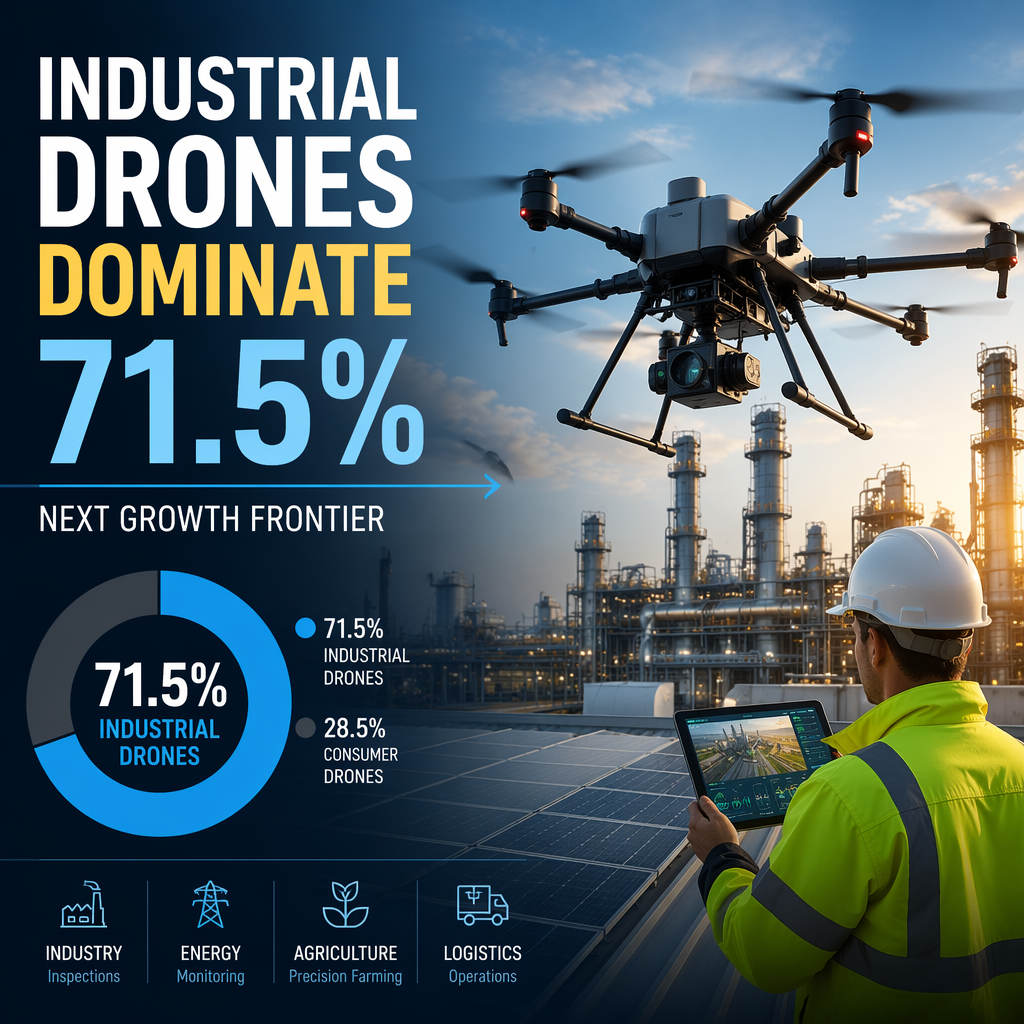
Industrial drones have surged ahead because they solve real business problems. Unlike consumer drones, which are often purchased for recreation or light photography, industrial models are built for specialized tasks such as surveying, asset inspection, mapping, monitoring, and data collection.
Several factors explain why they now dominate market share:
High ROI for End Users
Businesses are under pressure to do more with less. Drones help reduce labor costs, shorten inspection cycles, and improve access to hard-to-reach areas. A task that once required scaffolding, helicopters, or large field teams can often be completed more safely and quickly with a drone.
Expanding Use Cases
Industrial drones are no longer limited to one function. They are being deployed for:
- Roof and tower inspection
- Pipeline monitoring
- Crop analysis
- Warehouse inventory checks
- Surveying and site planning
- Search and rescue support
- Mining and quarry operations
This versatility strengthens demand across multiple sectors and makes drones a repeat-purchase category for many businesses.
Better Hardware and Software Integration
The market has matured beyond basic flight performance. Today’s industrial drones are supported by advanced sensors, thermal imaging, LiDAR, mapping software, cloud analytics, and automated flight planning. Wholesalers benefit from this because they can offer more complete solutions rather than just hardware boxes.
What 71.5% Market Dominance Means for Wholesalers
When a category becomes this dominant, the wholesale opportunity changes shape. Instead of relying only on early growth in a single product line, distributors need to think about ecosystem selling, replacement cycles, and expansion into related categories.
The Market Is Becoming More Segmented
Not every industrial drone buyer wants the same thing. Some need endurance and payload capacity, while others prioritize imaging quality, software compatibility, or resistance to harsh environments. This segmentation creates room for wholesalers to specialize in certain verticals or build multi-tier product offerings.
Buyers Expect a Full Solution
Industrial customers increasingly want more than the aircraft itself. They need batteries, controllers, maintenance support, training, data-processing tools, and compliance guidance. Wholesalers that can bundle these components will have a competitive edge.
Repeat Business Is Emerging
As fleets grow, so does the need for accessories, repairs, upgrades, and fleet management tools. That means the biggest margin opportunity may not be the initial drone sale, but the long-term ecosystem around it.
Where’s the Next Growth Frontier?
With industrial drones already dominant, the next phase of growth is likely to come from adjacent opportunities rather than from basic drone hardware alone. Wholesalers should pay close attention to the following areas.
1. Drone Services and Subscription Models
One of the most promising frontiers is the shift from product sales to service-based models. Many end users, especially smaller businesses, want the benefits of drone technology without the complexity of owning and managing a fleet.
Why This Matters
A wholesaler that partners with service providers or launches a subscription-based offering can unlock recurring revenue. This could include:
- Fleet leasing
- Drone-as-a-service packages
- Maintenance subscriptions
- Software licensing
- Data analytics services
These models reduce the pressure of one-time sales and create longer-term customer relationships.
2. Payloads and Specialized Accessories
As drone platforms become standardized, the real differentiation may move to payloads and modular accessories. This is an area where wholesalers can expand margins and diversify inventory.
High-Value Add-Ons Include
- Thermal cameras
- Multispectral sensors
- LiDAR systems
- Speaker and spotlight modules
- Delivery payloads
- Precision spraying systems
By stocking compatible accessories for different industrial use cases, wholesalers can increase average order value and serve customers with more tailored solutions.
3. Software, Data, and Analytics
The drone itself is only part of the value chain. The data captured by drones is often more valuable than the flight operation. This makes software one of the most attractive next-growth categories.
Opportunities in Software Include
- Flight planning and automation tools
- Asset inspection platforms
- GIS and mapping software
- Cloud-based data storage
- AI-powered defect detection
- Compliance and fleet management dashboards
Wholesalers that collaborate with software vendors can offer a more complete technology stack and position themselves as strategic partners rather than commodity suppliers.
4. Infrastructure and Public-Sector Adoption
Public-sector and infrastructure applications are emerging as a major growth driver. Governments and large institutions are increasingly using drones for road inspection, utility maintenance, emergency response, and public safety.
Why This Segment Is Attractive
These buyers often place large orders, require durable equipment, and need standardized support. They also tend to buy in cycles, which can create predictable demand. Wholesalers serving this segment should focus on reliability, documentation, after-sales support, and compliance readiness.
5. Training, Certification, and Support Services
As drone adoption widens, many buyers need help with pilot training, regulatory compliance, and operational best practices. This creates a valuable service layer for wholesalers.
Support Services Can Include
- Operator training programs
- Certification preparation
- Safety documentation
- Maintenance workshops
- Deployment consulting
This is especially important for industrial customers with limited in-house drone expertise. A wholesaler that provides support can strengthen customer loyalty and reduce churn.
Industry Verticals Worth Watching
While the industrial category remains dominant, growth is not evenly distributed. Wholesalers should identify the sectors most likely to drive the next wave of demand.
Construction and Surveying
Construction firms use drones for site mapping, progress tracking, and volume measurements. This segment benefits from repeat projects and frequent equipment upgrades.
Energy and Utilities
Power lines, wind turbines, solar farms, and pipelines all require regular inspection. These environments favor durable drones with specialized sensors and long-range capabilities.
Agriculture
Precision agriculture remains one of the strongest long-term opportunities, especially for crop monitoring, spraying, and field analytics.
Logistics and Warehousing
Inventory checks, internal transport, and delivery trials are expanding as businesses look for faster material handling solutions.
Mining and Heavy Industry
These sectors need rugged platforms for inspection, volumetric analysis, and site monitoring, making them attractive to suppliers of specialized systems.
What Wholesalers Should Do Now
To capture the next growth frontier, wholesalers need to shift from transactional thinking to strategic category development.
Build a Broader Product Portfolio
Stocking only drones is no longer enough. Wholesalers should develop offerings around sensors, batteries, repair parts, software, and training.
Focus on Vertical Expertise
A generic catalog can still work, but vertical specialization often performs better. Tailoring packages for construction, agriculture, utilities, or public safety can improve conversion and customer retention.
Strengthen Supplier Partnerships
The best wholesalers will work closely with manufacturers, software developers, and service providers to create complete solutions for end users.
Invest in After-Sales Support
Technical support, warranty management, repair networks, and training can all become competitive differentiators. In a maturing market, support quality often matters as much as product price.
The Outlook for the Wholesale Channel
Industrial drones dominating 71.5% of the market is not the end of the growth story; it is the signal that the category has matured enough to support deeper ecosystem development. For wholesalers, this means the easiest gains may already be behind them, but the most profitable opportunities are just beginning to emerge.
The next growth frontier is likely to come from services, software, specialized payloads, and industry-specific solutions. Wholesalers that adapt early will be better positioned to capture recurring revenue, improve margins, and build durable customer relationships.
In a market shaped by efficiency and innovation, the winners will be those who move beyond selling devices and start delivering complete operational value.






Add comment