
Drone Wholesale Buying in 2026 is no longer a simple price comparison. Buyers now have to evaluate product compliance, battery logistics, software support, after-sales service, and supply chain resilience before placing an order. Whether you are sourcing consumer camera drones, educational models, agricultural platforms, inspection systems, or delivery-ready hardware, a smart procurement process protects your margin and your reputation.
This guide walks through 10 critical questions every distributor, retailer, importer, and B2B procurement team should ask before placing a wholesale drone order. If you are also comparing broader product categories, you may find this drone cost guide useful for pricing context and product selection.
Table of Contents
- Why Drone Wholesale Buying Requires a New Approach in 2026
- 1. What Type of Drone Market Are You Targeting?
- 2. Does the Drone Meet Local Regulations and Certification Requirements?
- 3. Is the Supplier a Manufacturer, Trading Company, or Distributor?
- 4. What Is the True Total Cost Beyond Unit Price?
- 5. Can the Supplier Maintain Consistent Product Quality?
- 6. What Battery and Charging Standards Are Included?
- 7. Are Spare Parts and Repairs Readily Available?
- 8. What Software, App, and Firmware Support Is Provided?
- 9. How Reliable Is the Supply Chain and Production Timeline?
- 10. What Warranty and After-Sales Support Can You Offer Customers?
- Additional Factors to Consider Before Placing a Wholesale Order
- Practical Drone Wholesale Checklist for 2026
- Common Mistakes Wholesale Buyers Should Avoid
- Final Thoughts
Why Drone Wholesale Buying Requires a New Approach in 2026
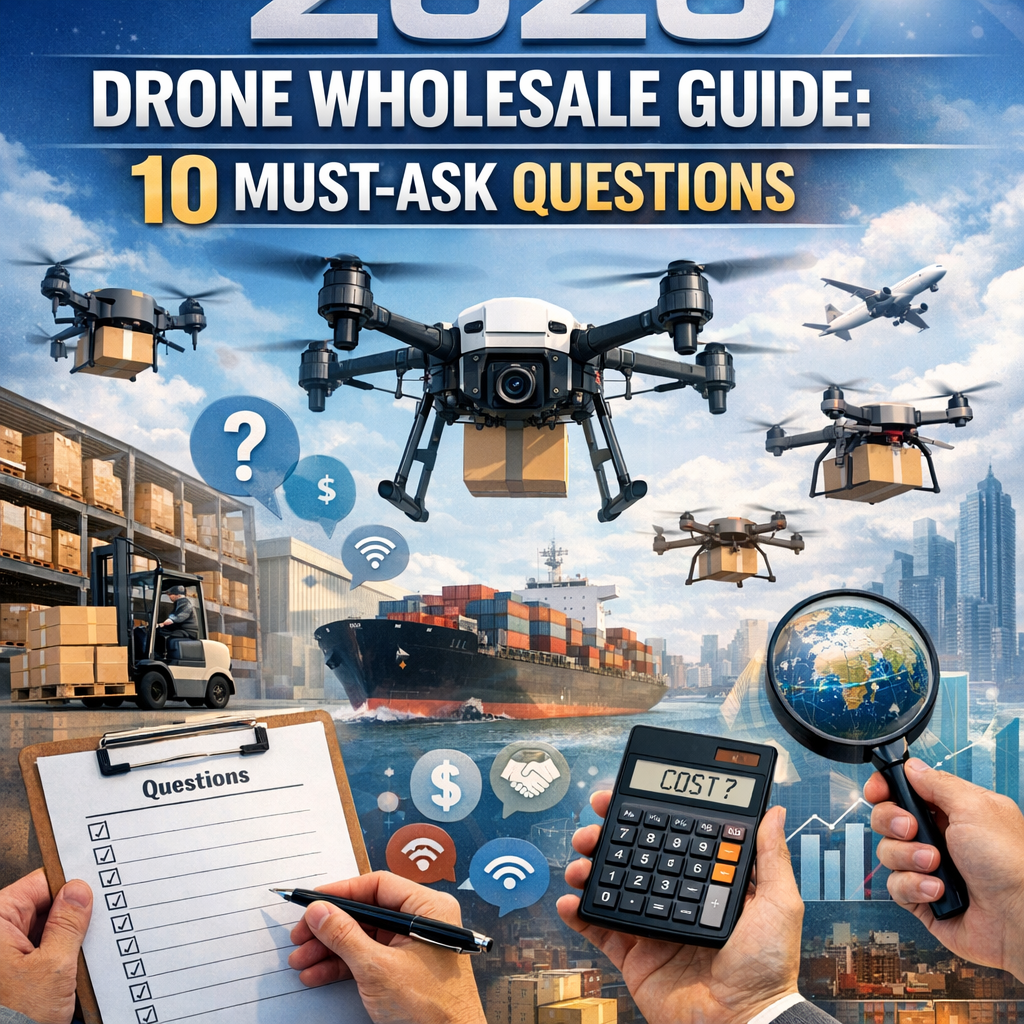
Drones have moved far beyond hobby use. Businesses now use unmanned aerial systems for surveying, mapping, farming, construction, emergency response, media production, and industrial inspection. At the same time, buyers face tighter aviation rules, changing import requirements, increased battery shipping scrutiny, and rising expectations from end users.
For wholesale buyers, this means a successful purchasing strategy must balance product performance, regulatory readiness, supplier credibility, and operational reliability. A low-cost drone that cannot be legally sold in your target market, lacks spare parts, or has poor firmware support can quickly become an expensive liability. That is why drone wholesale buying needs a process, not just a purchase order.
To see how product selection changes with use case, it also helps to compare drone categories and buyer needs with a beginner-friendly resource like this Beginner Drone Guide: 7 Smart Tips for Success.
1. What Type of Drone Market Are You Targeting?
Before contacting suppliers, define your customer segment clearly. The right wholesale drone depends heavily on how and where it will be used. This first step in drone wholesale buying shapes everything from camera quality to packaging to support expectations.
Consumer, Commercial, or Industrial Use
Consumer drones usually prioritize ease of use, camera quality, portability, and attractive pricing. Commercial drones may require better flight stability, longer battery life, higher payload capacity, and more reliable data capture. Industrial drones often need advanced sensors, weather resistance, enterprise software, and rugged construction.
A retailer selling beginner-friendly drones will have very different sourcing needs than a distributor supplying agricultural spraying drones or inspection platforms to utility companies. Start with the application, then evaluate specifications. That approach keeps drone wholesale buying aligned with real demand instead of marketing hype.
If your catalog includes premium camera models, this 4K Drone Buying Guide: 7 Smart Features can also help you compare features that matter to end users.
2. Does the Drone Meet Local Regulations and Certification Requirements?
Regulatory compliance is one of the most important wholesale buying considerations in 2026. Drone rules vary by country and region, and products that are acceptable in one market may be restricted in another. In drone wholesale buying, compliance mistakes can stop sales before they start.
Key Compliance Areas to Review
Buyers should check whether the drone complies with radio frequency standards, aviation authority requirements, remote identification rules, labeling requirements, and product safety regulations. In some markets, drones must meet specific requirements related to geofencing, operator registration, or electronic identification.
Ask suppliers for documentation before ordering, including test reports, certificates, user manuals, battery safety documentation, and declaration of conformity forms where applicable. Do not rely only on verbal assurances. For a reliable source on U.S. compliance and safety guidance, review the Federal Aviation Administration’s unmanned aircraft systems resource.
3. Is the Supplier a Manufacturer, Trading Company, or Distributor?
Understanding who you are buying from directly affects pricing, customization options, lead times, and accountability. In drone wholesale buying, supplier type can determine whether your business gets private-label flexibility or faster replenishment.
How Supplier Type Impacts Your Order
A direct manufacturer may offer better control over production, private labeling, and technical support. A trading company may provide broader product selection and lower minimum order quantities. A regional distributor may offer faster delivery and localized warranty service but at a higher unit cost.
None of these options is automatically better. The best choice depends on your business model, order size, technical requirements, and need for ongoing support. However, you should always verify business licenses, production capacity, export experience, and customer references. A strong sourcing partner can make drone wholesale buying much smoother over time.
4. What Is the True Total Cost Beyond Unit Price?
Wholesale drone buyers often focus on the quoted unit price, but the total landed cost is what determines profitability. Drone wholesale buying becomes much more predictable when you calculate the complete cost structure before committing.
Costs That Are Easy to Overlook
Beyond the drone itself, factor in packaging, spare batteries, remote controllers, chargers, propellers, carrying cases, manuals, software licenses, customs duties, freight, insurance, warehousing, returns, repairs, and marketing materials.
Battery shipping can be especially costly because lithium batteries are subject to strict transportation rules. A drone that appears inexpensive at the factory gate may become far less attractive once air freight, compliance testing, and after-sales obligations are included. That is a common blind spot in drone wholesale buying.
Build a landed-cost model
When you compare suppliers, use the same landed-cost formula for every quote. Include product price, shipping method, import taxes, inspection fees, packaging upgrades, and warranty reserves. If your team wants a broader framework for value selection, the article Drone Worth Buying? Honest Pros and Cons can help you think through cost versus utility.
5. Can the Supplier Maintain Consistent Product Quality?
Quality consistency is essential for wholesale success. A sample unit may perform well, but mass production quality can differ if the supplier lacks strong quality control. This is especially important in drone wholesale buying because small component defects can affect flight safety, customer satisfaction, and returns.
Quality Checks to Request
Ask about incoming material inspection, motor testing, GPS calibration, camera testing, battery cycle testing, firmware verification, flight stability checks, and final pre-shipment inspection. For larger orders, consider hiring a third-party inspection company to review goods before shipment.
It is also wise to request multiple samples from different production batches rather than relying on one hand-picked demonstration unit. Consistency matters more than a perfect sample. In drone wholesale buying, repeatable quality is more valuable than a single impressive flight demo.
For businesses that sell consumer and enterprise models side by side, the product comparison process can benefit from a broader sourcing framework such as this DJI Drone: 7 Best Features and Buying Tips.
6. What Battery and Charging Standards Are Included?
Batteries are one of the most sensitive components in drone wholesale procurement. They affect flight time, safety, shipping method, warranty claims, and customer satisfaction. No drone wholesale buying checklist is complete without a close look at the battery system.
Questions About Drone Batteries
Confirm battery capacity, voltage, chemistry, cycle life, charging time, safety protections, certification status, and whether replacement batteries will remain available. Also ask whether the battery is proprietary or compatible with standard replacements.
For retail sales, clear battery safety instructions are essential. For commercial buyers, battery management may be a key selling point, especially when drones are used daily in professional operations. In drone wholesale buying, batteries often influence both logistics and long-term customer satisfaction.
Charging, storage, and transport
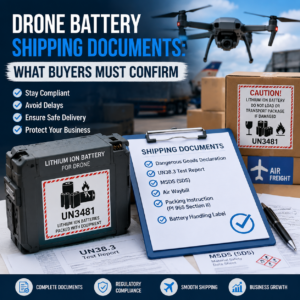
Ask whether the supplier includes the correct charger, whether multi-battery charging is supported, and whether storage recommendations are documented. If the drone line will move by air freight, verify all shipping classifications in advance so the order does not get delayed at export or import. Battery planning is one of the most practical parts of drone wholesale buying because it affects every stage after the sale.
7. Are Spare Parts and Repairs Readily Available?
Drones are active, mobile products that are more likely to experience crashes, damaged propellers, worn motors, gimbal issues, and battery degradation than many other electronics. A strong spare parts plan protects your reputation and revenue, and it is one of the most overlooked areas in drone wholesale buying.
Build a Parts Strategy Before Ordering
Ask suppliers for a spare parts list, recommended parts ratio, repair manuals, diagnostic tools, and replacement lead times. Common parts include propellers, landing gear, motors, batteries, chargers, camera modules, gimbals, shells, screws, antennas, and controllers.
If you plan to sell at scale, do not wait for customer complaints before stocking parts. A small investment in repair inventory can significantly reduce refund rates and improve buyer trust. Reliable spare parts support makes drone wholesale buying more sustainable because it shortens downtime and improves service outcomes.
8. What Software, App, and Firmware Support Is Provided?
Modern drones are not just hardware products. Apps, firmware, mapping tools, flight planning systems, and cloud platforms can determine the long-term value of a drone line. For drone wholesale buying, the software layer can be just as important as the frame, motors, or camera.
Software Support Questions
Ask whether the supplier provides regular firmware updates, app compatibility with iOS and Android, multilingual interfaces, SDK access, data security information, and technical documentation. For professional drones, also review compatibility with mapping, inspection, or fleet management software.
Software neglect can damage an otherwise good product. If an app stops working after a mobile operating system update, customers will blame the seller as much as the manufacturer. That is why drone wholesale buying should include a review of the software roadmap, not just the spec sheet.
Support for long product lifecycles
If you expect to sell the same model for multiple seasons, confirm how long firmware updates will remain available and whether legacy versions are maintained. Long-term support matters in drone wholesale buying because business buyers often expect product continuity after launch.
9. How Reliable Is the Supply Chain and Production Timeline?
In 2026, supply chain resilience remains a major concern for drone wholesale buyers. Components such as image sensors, chips, batteries, motors, and communication modules can experience shortages or price changes. A stable supply chain is one of the clearest signs of a supplier that can support drone wholesale buying at scale.
Protecting Against Supply Disruption
Ask suppliers about normal lead times, peak-season capacity, component sourcing, backup suppliers, production schedules, and order priority policies. If your business depends on steady inventory, avoid relying on a single product model or one untested factory.
It is also helpful to negotiate reorder terms in advance. Confirm whether the supplier can reserve production slots, maintain consistent specifications, and notify you before changing key components. In drone wholesale buying, even small part substitutions can create certification or performance risks later.
Plan for seasonal demand
Some drone categories spike in demand around holidays, farming seasons, trade show cycles, or public-sector budget windows. Build inventory plans around those peaks so your supply chain does not break when orders rise. If your team wants to understand product demand from a broader market perspective, the sourcing logic behind LF633 drone: 7 Powerful Wholesale Advantages may also be helpful.
10. What Warranty and After-Sales Support Can You Offer Customers?
A wholesale drone program is only sustainable if the warranty process is clear and manageable. Drones can generate more technical support requests than simpler consumer electronics, so after-sales planning is critical. Strong warranty planning is the final layer of protection in drone wholesale buying.
Clarify Warranty Responsibility
Discuss warranty length, covered defects, excluded damage, replacement parts, repair procedures, return shipping costs, and technical support channels. Make sure the agreement is written and specific.
For higher-value drones, buyers may need local repair partners or trained technicians. For entry-level models, replacement policies may be more practical than complex repairs. Either way, define the process before the first shipment leaves the factory. Without this clarity, drone wholesale buying can become a support burden instead of a growth channel.
Protect your brand experience
End users do not separate the manufacturer from the seller when something goes wrong. If your support team is slow, customers remember your brand, not the factory. A good service policy keeps drone wholesale buying profitable by reducing churn and preserving trust.
Additional Factors to Consider Before Placing a Wholesale Order
The 10 questions above cover the core procurement process, but several additional details can influence success. These details often decide whether drone wholesale buying becomes a stable revenue stream or a series of one-off transactions.
Branding and Packaging
If you plan to sell under your own brand, confirm private label options, logo placement, packaging design, instruction manual customization, barcode printing, and language requirements. Professional packaging can improve perceived value, but it must also comply with local labeling rules.
Minimum Order Quantity
Minimum order quantities vary widely depending on the drone category. Beginner drones may have lower thresholds, while specialized commercial models may require larger commitments or deposits. Negotiate based on long-term potential, not just the first order. That is a practical habit in drone wholesale buying because your first order rarely reflects your full growth potential.
Payment Terms and Risk Control
For new suppliers, avoid paying the full balance before inspection. Common approaches include deposits, balance payments after inspection, letters of credit, or staged payments for larger contracts. Use secure payment methods and ensure the supplier name matches the business documents.
Also confirm who owns tooling, files, and custom packaging artwork if you are developing a private label program. In drone wholesale buying, ownership details matter when you scale or switch suppliers later.
Practical Drone Wholesale Checklist for 2026
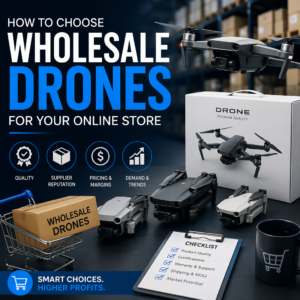
Before approving an order, review the following checklist:
- Target customer segment and use case are clearly defined
- Product certifications and regulatory documents are verified
- Supplier identity, experience, and references are checked
- Total landed cost is calculated, including freight and duties
- Samples are tested under realistic conditions
- Battery safety and shipping requirements are confirmed
- Spare parts and repair procedures are available
- Firmware, app, and software support are documented
- Lead times and reorder terms are agreed in writing
- Warranty policy and after-sales responsibilities are clear
If you want a broader starting point for supplier screening, keep this checklist close during every stage of drone wholesale buying.
Common Mistakes Wholesale Buyers Should Avoid
One of the biggest mistakes is choosing a supplier based only on the lowest price. In the drone industry, low pricing may hide weak components, limited testing, poor documentation, or unreliable support. Another common error is ordering large quantities before testing samples thoroughly.
Buyers should also avoid ignoring local regulations, underestimating battery shipping complexity, and failing to plan for spare parts. A profitable drone wholesale business depends on repeat customers, not just one-time sales. Reliability, safety, and support are essential to building that trust. Drone wholesale buying works best when the buyer thinks like a long-term operator, not a short-term reseller.
Final Thoughts
Wholesale drone buying in 2026 requires a careful balance of market knowledge, technical evaluation, compliance review, and supplier management. The best procurement decisions begin with clear customer needs and continue through supplier verification, sample testing, quality control, logistics planning, and after-sales support.
By asking the right questions before placing an order, buyers can reduce risk, protect margins, and build a stronger drone product line. In a market where technology changes quickly and customer expectations continue to rise, a disciplined sourcing strategy is the difference between short-term inventory and long-term business growth. For teams that treat drone wholesale buying as a structured process, the result is usually fewer surprises and stronger repeat sales.


Add comment