
Drones have become a common sight in photography, agriculture, delivery testing, inspection work, and recreational flying, and one of the first questions people ask is how long a drone can stay in the air. The answer depends on the type of drone, its battery size, payload, weather conditions, and the way it is flown. While some small consumer models may only last a few minutes, higher-end drones can remain airborne much longer. Understanding drone flight time helps buyers choose the right model and helps pilots plan safer, more efficient flights.
Table of Contents
What Determines Drone Flight Time?
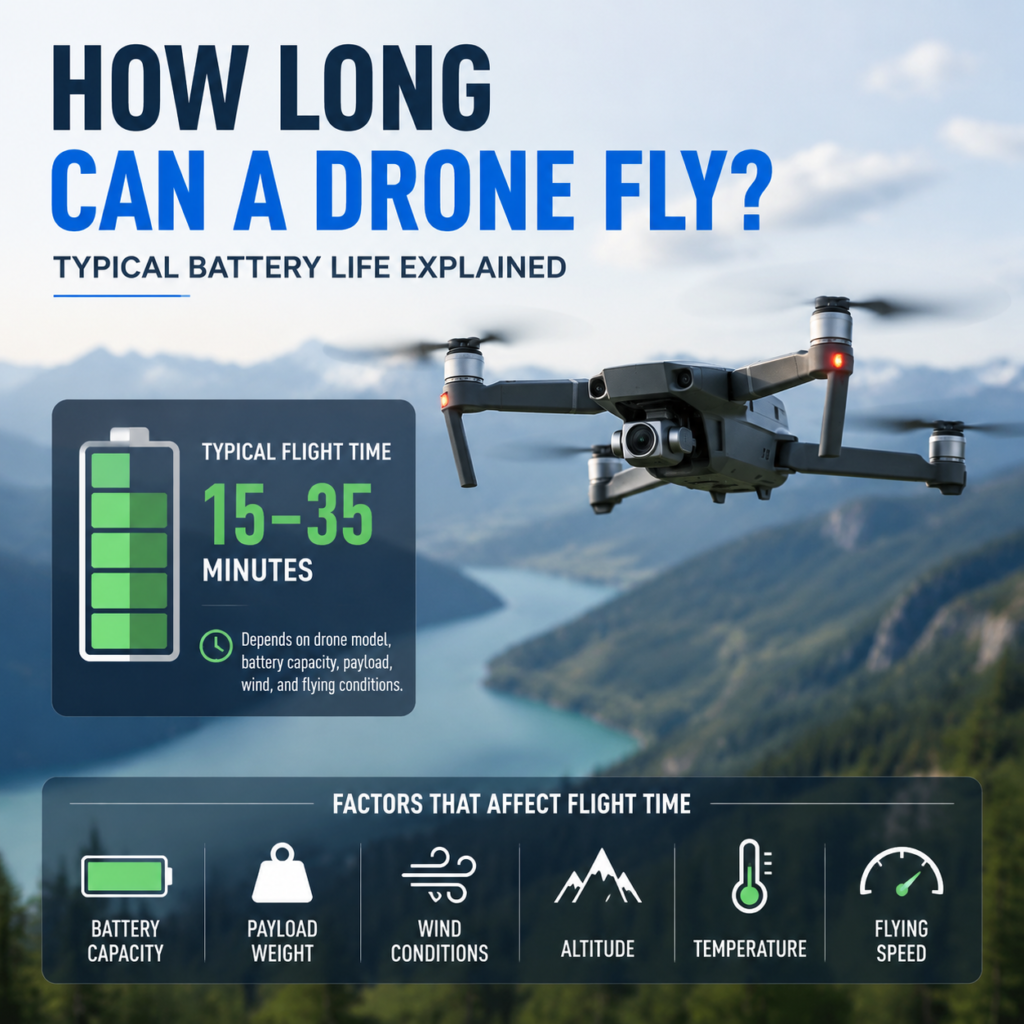
A drone’s drone flight time is not just a matter of battery capacity. Several factors work together to affect how long it can fly before needing to land. In practice, even small changes in weight, wind, and pilot input can make a noticeable difference in performance. If you want a realistic estimate, it helps to think about the complete flight setup rather than a single spec on the box.
Battery Size and Type
The battery is the main source of power for a drone. Most consumer drones use lithium-polymer batteries because they are lightweight and can deliver strong bursts of energy. Larger batteries generally provide longer flight times, but they also add weight, which can reduce efficiency. This means there is a balance between power and portability. A well-sized battery often delivers better real-world results than a battery that is simply larger on paper.
Drone Weight
Heavier drones require more power to stay in the air. A compact drone with a small camera may fly longer than a larger drone carrying professional imaging equipment. Additional accessories, such as payloads, guards, or extra sensors, can shorten drone flight time by making the drone work harder. Even the same aircraft can show different endurance when flown with different accessories attached. That is one reason why a light setup often lasts longer than a fully equipped one.
Flight Conditions
Wind, temperature, humidity, and altitude all affect performance. Flying in strong winds forces the motors to use more power to maintain stability. Cold weather can also reduce battery efficiency, which shortens the usable flight time. At higher altitudes, thinner air may make it harder for the drone to generate lift, increasing power demand. For long sessions, calm weather usually gives the most reliable results. If you need the most consistent numbers, test the drone in conditions similar to the ones you plan to fly in most often.
Flying Style
Aggressive flying drains batteries faster. Quick acceleration, sharp turns, rapid climbs, and frequent hovering all consume energy more quickly than smooth, steady flight. A drone flown gently in ideal conditions will usually stay airborne longer than the same model flown at full speed. Smooth stick control and thoughtful route planning are easy ways to improve efficiency. Even small changes in throttle input can make a difference over the course of a full battery cycle.
Firmware, Propellers, and Maintenance
Less obvious factors can also affect performance. Updated firmware may improve efficiency or battery management, while worn propellers can reduce lift and force the motors to work harder. Dirt, damage, or loose components can also affect smooth airflow and shorten drone flight time. Regular maintenance is not just about safety; it is also one of the easiest ways to keep flight performance consistent. A drone that is properly tuned, clean, and inspected usually performs more predictably than one that is neglected.
Typical Drone Flight Times by Category
Different drone categories have very different endurance levels. A “typical” drone flight time can vary widely depending on the design and purpose of the aircraft, so it helps to compare common types before setting expectations. The best way to judge endurance is to match the drone type to the job you want it to do.
Toy and Entry-Level Drones
Small toy drones often fly for only 5 to 10 minutes. These models are designed to be affordable and easy to use, so they usually have smaller batteries and simpler components. They are fun for short practice sessions but are not built for long missions. For beginners, the shorter battery life can actually be helpful because it keeps the flying session manageable while skills develop.
Consumer Camera Drones
Most popular consumer drones offer flight times between 20 and 35 minutes under standard conditions. This range is common for models used in photography, videography, and casual flying. Manufacturers often advertise maximum flight times based on ideal test environments, so real-world results may be slightly lower. That is why buyers should compare published figures with realistic expectations instead of relying on the longest claim alone. In everyday use, a few extra minutes of endurance can be the difference between finishing a shot and rushing back to land.
Professional and Enterprise Drones
Larger drones used for mapping, surveying, inspection, and commercial filming often fly for 30 to 45 minutes, and some specialized models last even longer. These drones may use advanced battery systems, larger propellers, and more efficient motors to extend endurance. For jobs where every minute matters, longer battery life can improve productivity and reduce downtime. In many professional settings, endurance is closely tied to workflow efficiency and project cost.
Racing Drones
Racing drones usually have short flight times, often around 3 to 8 minutes. They are built for speed, agility, and performance rather than endurance. Pilots in racing and freestyle flying generally expect short battery life as part of the experience. In this category, burst power matters more than total airtime. A racing setup is optimized for responsiveness, not for hovering or extended video capture.
Fixed-Wing Drones
Fixed-wing drones are different from multirotor drones because they generate lift with wings rather than relying entirely on rotor thrust. As a result, they can stay in the air much longer, sometimes for hours. They are often used for large-area surveying, mapping, and long-range missions. For a broader look at use cases, see our guide to agricultural drones, which often rely on efficient flight planning to cover larger areas. Their endurance makes them useful when covering distance matters more than precise hovering.
Why Advertised Flight Time Can Be Misleading
Manufacturers often list the longest possible flight time, but that number is usually measured under controlled test conditions. In real use, several factors can reduce battery life. For a practical comparison of what to expect before you buy, our article on drone pros and cons can help set realistic expectations. Looking past the marketing claim is one of the smartest ways to judge real value.
Ideal Test Conditions
Advertised times are often based on calm weather, minimal payload, moderate speed, and a fresh battery. The drone may be hovering or flying slowly in a way that uses less energy than normal operation. In other words, the number on the box usually reflects best-case efficiency rather than everyday flying.
Real-World Differences
Once a camera is attached, the drone faces wind, changes direction, climbs, descends, and uses the battery more actively. Because of this, a drone advertised for 30 minutes may realistically provide 22 to 28 minutes of useful flight time depending on conditions. That gap is normal and does not necessarily mean the drone is underperforming. It simply reflects how a real mission differs from a controlled endurance test.
Battery Reserve
Pilots should also remember that they should not use the entire battery. It is important to leave enough power for a safe return and landing. In practice, that means the true “usable” flight time is a little less than the maximum possible time. Leaving a margin also helps reduce stress on the battery over time. A good habit is to think in terms of a working buffer, not a full discharge.
How to Extend Drone Flight Time
Although every drone has limits, there are practical ways to make each battery last longer. If you are still choosing a model, this advice pairs well with our beginner drone buying guide. A few simple habits can make a big difference from one battery cycle to the next. The goal is not to chase every last second, but to fly efficiently enough that the battery works in your favor.
Keep the Drone Light
Remove unnecessary accessories before flying. Extra weight increases motor load and drains power faster. Using only the equipment needed for the mission can improve efficiency. When possible, keep the setup as simple as the job allows so the aircraft does not have to carry more than necessary.
Fly Smoothly
Gentle movements help conserve battery life. Avoid sudden throttle changes, high-speed maneuvers, and unnecessary hovering. Planning a flight path in advance can also reduce wasted motion. In many cases, smooth control is one of the easiest ways to improve drone flight time without changing hardware. A stable route is usually more efficient than repeated corrections and quick direction changes.
Maintain the Battery
Healthy batteries perform better. Store them properly, avoid extreme temperatures, and do not let them sit discharged for long periods. Regular maintenance helps preserve both drone flight time and battery lifespan. If a battery begins to swell, drain unusually fast, or heat up excessively, it should be checked before the next flight. Consistent care often leads to more predictable performance over time.
Check Weather Before Flying
Calm weather is ideal for maximizing endurance. Strong winds, rain, and cold temperatures can all reduce performance. If long flight time matters, flying in mild conditions makes a noticeable difference. A short delay for better weather can sometimes add several useful minutes to a mission. Many pilots find that weather planning is just as important as battery planning.
Use Efficient Settings
Some drones have flight modes that balance performance and energy use. Lowering camera settings, reducing accessory power use, or choosing an efficient speed can help stretch battery life. Even small adjustments can improve overall drone flight time when the flight is planned carefully. If your drone offers multiple modes, test them to learn which one gives the best balance of speed, stability, and endurance.
Plan Landings Early
One of the simplest ways to improve a session is to land before the battery gets critically low. That may sound obvious, but pilots sometimes push too long while trying to capture one more shot. In reality, a conservative landing schedule protects the battery and reduces stress on the aircraft. It also gives you a better chance of landing smoothly instead of scrambling for a safe return.
Learn the basics before your first long flight
If you are new to the hobby, a practical U.S. Federal Aviation Administration drone safety resource can help you plan safer flights and understand the rules that affect where and how long you can fly. Good planning is especially important when you want to make the most of a limited battery. The better you understand the aircraft, the easier it is to manage power efficiently.
How Long Should a Drone Fly for a Mission?
The right drone flight time depends on the purpose of the flight. A hobbyist taking a few aerial photos may only need a short session, while a surveyor covering a large site may need much longer endurance. The mission should always guide the battery and aircraft choice. A drone that is perfect for one task may be too limited or too powerful for another.
Recreational Use
For casual flying, 15 to 30 minutes is usually enough for one battery cycle. Many hobby pilots carry extra batteries to extend their session without waiting for a recharge. That approach gives more flying time without requiring a larger, more expensive platform. It also keeps the experience flexible, especially for families, beginners, and weekend flyers.
Photography and Video
Aerial content creators often need enough time to position the drone, frame shots, and capture multiple angles. For this use, longer battery life is especially valuable because it reduces interruptions and allows for more creative flexibility. In many cases, a steadier drone flight time also makes it easier to repeat shots and avoid rushed decisions. The more complex the shot list, the more useful extra endurance becomes.
Commercial Operations
Inspection, mapping, and monitoring tasks often require consistent endurance and reliability. In these cases, drone flight time affects productivity, planning, and cost. Operators may choose drones with swappable batteries or long-endurance platforms to keep work moving efficiently. For repeat jobs, predictable endurance can matter as much as maximum airtime. Commercial crews often value consistency because it makes scheduling and reporting much easier.
Training and Skill Development
For training, shorter sessions can actually be beneficial. New pilots often learn faster when they can fly, land, review mistakes, and fly again without waiting too long. A modest battery window can support focused practice instead of exhausting long sessions. That makes drone flight time useful not only for missions, but also for building confidence and good habits.
Safety Considerations Related to Flight Time
Knowing how much battery remains is critical for safe flying. A drone that runs out of power far from the takeoff point can crash or force an emergency landing. That is why endurance planning should always be part of preflight preparation. Good battery management protects both the aircraft and the people and property around it.
Return-to-Home Planning
Many drones include a return-to-home feature that activates when the battery gets low or when the signal is lost. Pilots should understand how much time the drone needs to safely return under normal conditions and make sure to land before the battery becomes too low. Wind, distance, and altitude all affect how much reserve is truly needed. If you fly farther out than expected, the return trip may take longer than the original outbound leg.
Monitoring Battery Status
Good flight habits include watching battery percentage during the entire flight, not just at the beginning. It is wise to begin the return trip earlier than expected, especially if flying into the wind or in changing conditions. A cautious return gives you more control and reduces the risk of an unexpected landing. Monitoring voltage, not just percentage, can also help experienced pilots better understand battery condition.
Avoid Pushing Batteries Too Far
Running batteries down to zero can damage them over time and may increase the risk of sudden power loss. Safe flight management means leaving a buffer rather than using every last second of power. Careful battery habits also support more consistent drone flight time over the long term. In practice, a little reserve is one of the most valuable safety tools a pilot has.
Choose a Landing Site Before You Need It
Another smart habit is identifying a landing zone before the drone gets low on power. Open areas without obstacles make emergency landings much easier if something changes unexpectedly. This is especially important when flying over trees, water, or buildings. Planning the landing early helps reduce risk and makes the final minutes of a flight much less stressful.
Choosing the Right Drone for Your Needs
When comparing drones, battery life should be considered alongside camera quality, range, build quality, and ease of use. A model with longer endurance is not always the best choice if it is too large, too expensive, or more complex than you need. The best purchase is usually the one that fits your real flying habits rather than the one with the longest advertised number. If you are weighing value as well as endurance, our article on drone cost guide can help you balance budget and performance.
Think About Your Main Use Case
If you mostly fly for fun, a mid-range consumer drone may be enough. If you create video content, you may benefit from extra endurance and battery-swapping options. If you work in inspections or mapping, professional-grade reliability may matter more than portability. Matching the drone to the mission is often the most effective way to get better results from every flight.
Consider Battery Ecosystem and Extras
Some drone brands offer batteries, charging hubs, and power accessories that make daily use easier. A larger ecosystem can reduce downtime and help you spend more time flying and less time waiting. That convenience can be just as important as raw drone flight time. If a drone supports fast charging or multiple battery packs, it may be a better long-term fit even if its single-battery endurance is similar to another model.
Look for Real-World Reviews
Independent reviews and user reports often provide a more accurate picture than product pages do. Look for details about wind performance, camera use, and flight conditions instead of only reading the headline number. That approach gives you a better idea of what to expect in normal flying conditions. A realistic review often reveals whether the battery life feels practical in everyday use or only impressive in ideal tests.
The Bottom Line
So, how long can a drone typically fly? For many consumer drones, the answer is usually around 20 to 35 minutes, though smaller drones may last only a few minutes and professional or fixed-wing models can stay airborne much longer. The actual time depends on battery capacity, weight, weather, and flying style. Manufacturers may advertise ideal numbers, but real-world endurance is often a little shorter. By understanding the factors that affect drone flight time and using smart flying habits, pilots can get the most from every battery and enjoy safer, more productive flights.
For a simple rule of thumb, plan around your real-world average rather than the maximum number on the box. That approach makes it easier to finish the mission, protect the battery, and keep each flight within a safe margin. If you are still deciding what kind of drone makes sense for you, start with your mission, your budget, and the amount of flying time you genuinely need.






Add comment