
Choosing the right first drone can feel overwhelming, especially with so many models promising better cameras, longer flight times, and advanced features. If you are looking for a beginner drone, the best choice is usually not the most powerful model on the market, but the one that is easiest to learn, affordable to replace if damaged, and stable enough to help you build confidence. If you are wondering what drone to buy for beginners, the answer depends on how you plan to use it, how much you want to spend, and how quickly you want to progress from basic flying to more advanced aerial photography.
Table of Contents
What Makes a Drone Good for Beginners?
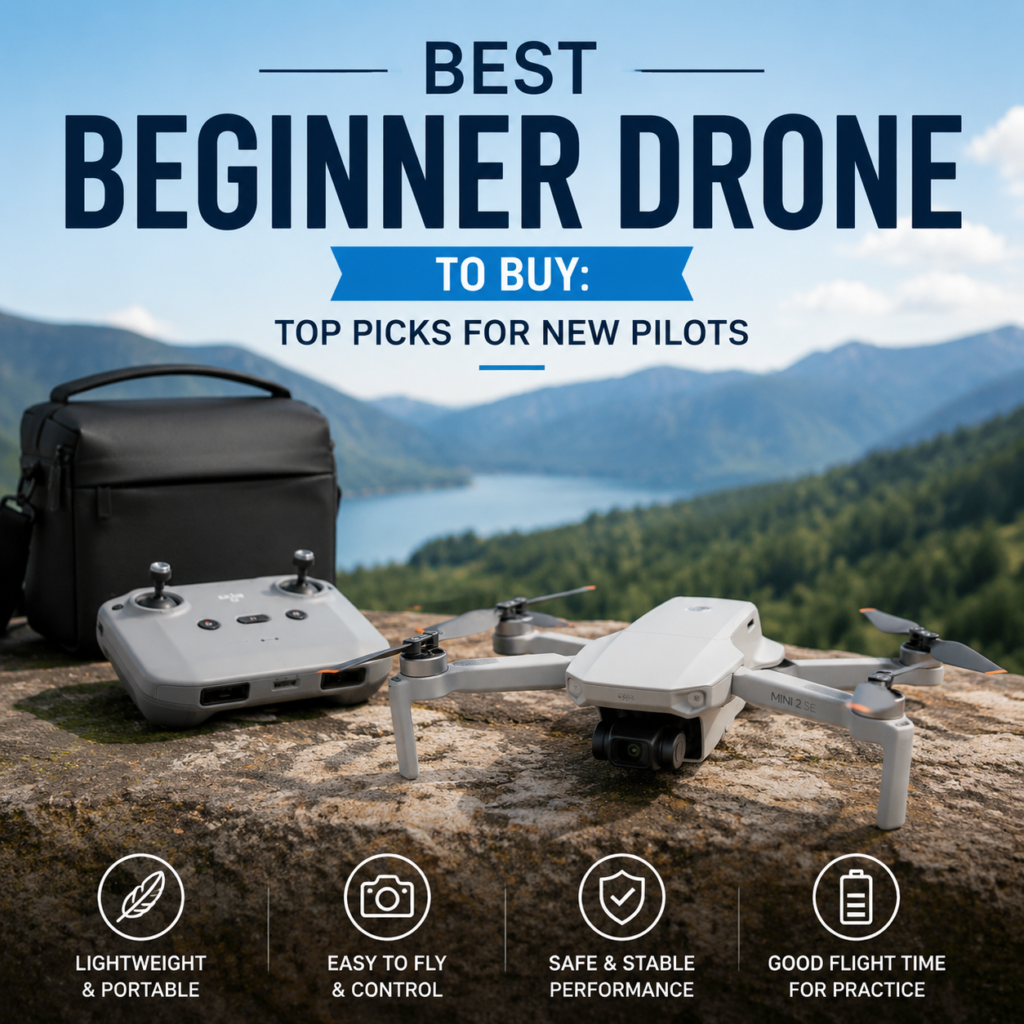
A beginner drone should be simple to control, durable enough to survive a few mistakes, and packed with features that reduce the learning curve. Not every drone is built with new pilots in mind, so it helps to know which features matter most before making a purchase. The best first drone for new pilots is usually the one that makes learning feel manageable instead of stressful.
Easy Controls and Stable Flight
The best beginner drones are easy to hover, respond smoothly to the controls, and stay steady in the air. Stability is important because new pilots often overcorrect or lose orientation during the first few flights. Features such as altitude hold, one-key takeoff and landing, and GPS positioning can make the drone much easier to manage. A stable beginner drone gives you room to practice without fighting the controls on every flight. For readers who want more buying help, the Beginner Drone Guide: 7 Smart Tips for Success is a useful next step.
Durability and Repairability
Crashes are a normal part of learning. A beginner drone should be able to handle minor bumps without breaking immediately. Propeller guards, lightweight construction, and readily available replacement parts are all useful. It is also smart to choose a model with affordable repairs, because your first drone is likely to take a few hard landings. When you are learning, a durable frame can be just as important as a good camera.
Safety Features
Many modern drones include beginner-friendly safety tools like return-to-home, automatic hovering, obstacle detection, and low-battery alerts. These features can prevent flyaways and reduce the chance of losing the drone. If you are new to flying, these safety functions can make a huge difference in your confidence. A good beginner drone does more than fly well; it also helps protect your investment while you learn.
What New Pilots Usually Need Most
Most beginners need a drone that hovers predictably, lands gently, and gives clear feedback when battery power runs low. You do not need a top-tier racing model or a cinematic platform on day one. What you need is a trainer that helps you build basic skills such as throttle control, direction changes, and smooth stops. That is why the ideal beginner drone is often simpler than the drone a more experienced pilot might choose.
Types of Beginner Drones
Not all drones for beginners serve the same purpose. Some are designed for learning the basics, while others are built for photography or outdoor adventure. Understanding the main types can help you choose the right one for your goals.
Toy Drones
Toy drones are usually the cheapest option and are ideal if you want to practice flight controls without a big investment. They are often small, lightweight, and best used indoors or in very calm outdoor conditions. While they usually lack advanced features, they can be a great way to learn orientation, throttle control, and turning without worrying too much about cost. For many people, a toy model is the most practical first beginner drone because it keeps the learning process low risk.
Camera Drones
If you are interested in aerial photography or video, a beginner camera drone is probably the better choice. These drones often include stabilized cameras, GPS, and automated flight modes. They cost more than toy drones, but they offer a much better long-term experience for someone who wants both learning and content creation. If you want to compare more advanced options later, see our 4K Drone Buying Guide: 7 Smart Features. A camera-equipped beginner drone can be the best compromise between fun and useful footage.
FPV Drones
First-person-view drones are exciting, fast, and immersive, but they are usually not the easiest starting point for absolute beginners. They require more skill and often more maintenance. If you are drawn to FPV, it may be better to start with a basic trainer drone first before moving into this category. In most cases, the smartest first beginner drone is the one that teaches control before speed.
Mini and Foldable Drones
Mini and foldable drones appeal to new pilots who want something portable and simple to carry. They are often lighter than full-size models, which can make them easier to store and transport. Some still offer GPS, return-to-home, and decent cameras, so they can be a strong option for travelers or casual users. A compact beginner drone is especially useful if you want to practice in different locations without hauling a large setup.
Key Features to Look For
Before buying your first drone, focus on the features that will make flying easier rather than the ones that simply sound impressive on paper.
Flight Time
Battery life is one of the most important factors to consider. Many entry-level drones only fly for 5 to 15 minutes per battery. Longer flight time is always helpful, but it is even better to buy a beginner drone that comes with extra batteries. That way, you can spend more time learning and less time waiting for recharges. More airtime means more practice, and more practice helps new pilots improve faster.
Range
A beginner does not need extreme long-range capabilities. In fact, starting with a modest range is often safer because it keeps the drone within a manageable distance. The goal is to learn control, not to push the drone as far as possible on day one. A shorter range can also make it easier to stay focused on line of sight and orientation, which are important habits for every beginner drone pilot.
GPS and Position Hold
GPS is one of the most valuable features for new pilots. It helps the drone stay in place, follow a set path, and return home if the signal is lost or the battery runs low. Position hold is especially useful outdoors, where wind can make manual hovering difficult. If you want a beginner drone that feels more forgiving, GPS support is often worth paying for.
Camera Quality
If recording photos or videos matters to you, camera quality should be part of your decision. However, beginners should not let camera specs become the only deciding factor. A drone with a great camera but poor stability is still difficult to use. It is usually better to choose a balanced model that flies well and still captures decent footage. For new pilots, the best camera is the one you can actually keep steady in the air.
Controller Layout and App Experience
Many first-time buyers focus on the drone itself and forget about the controller. A clean button layout, responsive sticks, and an easy-to-read mobile app can make a big difference in day-to-day use. If the app is confusing, even a good beginner drone can feel frustrating. Look for clear calibration steps, simple menus, and reliable connection behavior so you can spend more time flying and less time troubleshooting.
Return-to-Home and Landing Assistance
Return-to-home can be a lifesaver if the battery gets low or the signal drops. Landing assistance is also useful because many new pilots struggle with smooth descents. Together, these features reduce the chance of a hard crash and can make a beginner drone feel much less intimidating. They are especially helpful when you are still building confidence outdoors.
How Much Should You Spend?
Price is often the biggest question for first-time buyers. The right budget depends on whether you simply want to learn to fly or you want a drone that can also produce quality images and videos.
Budget Option
If you only want to practice, a budget drone can be a good starting point. These models are usually inexpensive, easy to replace, and less stressful to fly. They are ideal for indoor use or for learning the basics before upgrading. A low-cost beginner drone is often the smartest purchase if you are unsure how committed you are to the hobby.
Mid-Range Option
For most beginners, the mid-range category offers the best balance of value and features. These drones often include GPS, better stability, longer flight times, and improved cameras. They may cost more upfront, but they usually deliver a much better flying experience and last longer as your skills improve. If you want a beginner drone that can grow with you, the mid-range category is often the sweet spot.
Higher-End Beginner Models
Some premium drones are still suitable for new pilots, especially if they include strong safety features and automatic flight assistance. These are worth considering if you are serious about photography or want a drone that you will not outgrow quickly. Still, buying a very expensive drone as your very first model can be risky if you are not yet comfortable flying. A premium beginner drone only makes sense if you are ready to learn carefully and protect the investment.
Value Matters More Than the Sticker Price
The cheapest option is not always the best deal, and the most expensive option is not always the safest choice for a first purchase. Think about total value: batteries, spare parts, support, durability, and how long the drone will remain useful as your skills improve. A well-balanced beginner drone often saves money over time because it reduces frustration and replacement costs.
Practical Tips Before You Buy
Buying the drone is only the first step. A little preparation can make your first flying experience much smoother.
Start with a Simulator if Possible
A drone simulator can help you learn the controls without risking damage. This is especially useful if you plan to fly a more advanced model. Practicing on a simulator can build muscle memory and reduce mistakes during your real flights. Many new pilots find that even a short simulator session makes the first beginner drone flight feel much less stressful.
Read Local Drone Rules
Before flying, make sure you understand the rules in your area. Drone regulations can cover where you can fly, how high you can go, and whether registration is required. For official guidance in the United States, the FAA’s Unmanned Aircraft Systems resource explains the basics clearly. Following local laws is essential for safe and responsible flying. If you plan to travel, check the rules before you take your beginner drone anywhere new.
Buy Extra Batteries and Spare Props
Extra batteries are one of the best upgrades for any beginner drone. Spare propellers are also worth having because blades are often the first parts to wear out or break after a crash. These small purchases can save you frustration later. They also make practice sessions more productive because you spend less time waiting for repairs or charging.
Practice in an Open Area
Your first flights should happen in a wide, open space with minimal obstacles. Avoid trees, power lines, crowded parks, and windy weather. A calm environment gives you room to make mistakes while learning. A simple field or quiet open area is usually the best place to test a beginner drone for the first time.
Inspect the Drone Before Every Flight
Before each takeoff, check the props, battery, frame, and camera mount if your model has one. A loose propeller or a damaged battery can turn a normal flight into an avoidable problem. This habit only takes a minute, but it can protect both your drone and the people around you. Careful pre-flight checks are especially important when you are still learning how to handle a beginner drone.
Learn to Hover First
One of the best early skills is learning how to hold a steady hover at a low altitude. Once you can keep the drone still, the rest of the controls become much easier. Practice gentle forward, backward, and side-to-side movements before trying more complex maneuvers. A beginner drone that hovers consistently gives you a much better platform for learning these basics.
What to Expect on Your First Flights
Your first few sessions will probably feel awkward, and that is completely normal. Even with a forgiving model, a new pilot may drift, oversteer, or take longer than expected to line up a landing. The good news is that these mistakes are part of the learning process, and they usually improve quickly with short, focused practice.
Start with simple takeoffs, gentle hovers, and slow descents. Avoid trying flips, fast turns, or long-distance flights until you are comfortable with the basics. The goal is not to impress anyone during the first session. The goal is to build confidence and get familiar with how the drone reacts to each command.
It also helps to keep early flights short. A few controlled practice runs are more useful than one long, stressful session. If your drone has beginner modes or speed limits, use them at first. These features can make a beginner drone easier to understand while you are still learning the relationship between stick movement and flight behavior.
How to Compare Beginner Models
When you are comparing options, it helps to look at the whole package instead of focusing on a single feature. A drone with a slightly lower camera resolution may still be the better choice if it is more stable, easier to repair, and safer to fly. On the other hand, a model with a strong camera and weak flight controls may be frustrating for a new pilot.
Try to compare drones using a few simple questions: Does it hover well? Does it include helpful safety tools? Are parts easy to find? How long does the battery last? Is the controller easy to understand? Would replacing it be affordable if you crash on day one? These questions make it easier to spot the beginner drone that offers real value rather than just flashy marketing.
If you are still unsure after comparing features, reading a practical buying guide can help narrow your choices. You may also find it useful to look at a broader discussion of whether a drone is worth the money before deciding on your first purchase. That kind of comparison can be helpful when you are choosing between a basic trainer and a more capable model with room to grow.
So, What Drone Should a Beginner Choose?
For most new pilots, the best drone is one that combines stable flight, simple controls, and helpful safety features without being too expensive. A beginner does not need the fastest model or the most advanced camera. Instead, look for a drone that can help you learn gradually and survive the inevitable early mistakes.
If your main goal is just to learn, choose a low-cost, durable drone with basic controls. If you want to take photos or videos, go for a mid-range GPS drone with a decent camera and beginner-friendly automated features. In either case, prioritize ease of use, reliability, and safety over flashy specifications.
A well-chosen beginner drone can also make it easier to move into more capable models later. That is why many new pilots start with something simple and then upgrade once their confidence improves. If you want a broader comparison of whether a drone is worth the money, you may also like Drone Worth Buying? Honest Pros and Cons.
For buyers who want to keep the decision simple, the best answer is often this: choose the most stable beginner drone you can afford, make sure replacement parts are easy to get, and pick a model with safety features that match your skill level. That approach keeps the learning curve manageable while still giving you room to enjoy the hobby.
Final Thoughts
The question of what drone to buy for beginners does not have a single perfect answer, but the best choice is usually the one that matches your skill level and goals. A good first drone should make flying fun, manageable, and low-stress. By focusing on stability, durability, battery life, and helpful safety features, you can avoid common beginner frustrations and start enjoying the experience from the very first flight.
Whether you are buying for casual fun, photography, or future aerial adventures, the right beginner drone can turn a steep learning curve into an exciting new hobby. If you choose carefully, practice in a safe area, and learn the local rules, your first drone can be the start of a long and rewarding flying journey. As your confidence grows, you will have a much better idea of what features matter most in your next upgrade.
FAQ: Choosing the Right First Drone
What is the easiest drone for a beginner to fly?
The easiest models are usually stable drones with altitude hold, GPS positioning, and one-key takeoff and landing. These features reduce the amount of manual correction needed and make early practice less stressful.
Should a beginner buy a camera drone first?
Only if aerial photos or video are important to you. If your main goal is learning, a simpler model may be a better first step because it is easier to control and cheaper to replace.
How much should I spend on my first drone?
That depends on your goals, but many new pilots do well in the mid-range category. It is often the best balance between affordability, stability, and useful features.
Do I need GPS on a beginner drone?
You do not absolutely need it, but GPS can make flying much easier. It helps with hovering, return-to-home, and outdoor stability, which is valuable for new pilots.
What should I practice first?
Start with takeoff, hovering, gentle turns, and landing. Once those basics feel comfortable, you can move on to longer flights and more advanced maneuvers.

Add comment