
If you are asking about a drone licence UK rules require, the answer depends on the drone you fly and how you use it. In many cases, you do not need a traditional pilot licence, but you may still need to register, complete training, and follow Civil Aviation Authority (CAA) rules before taking off. Understanding the UK drone regulations early can help you avoid fines, keep people safe, and fly with confidence.
- Understanding drone rules in the UK
- Do you need a drone licence UK pilots should have?
- What is the difference between a licence, operator ID, and Flyer ID?
- Which drones need registration?
- Where can you legally fly a drone in the UK?
- What happens if you fly without the proper requirements?
- How to stay compliant as a drone pilot
- Special considerations for children and beginners
- What commercial drone users should double-check
- Why registration and licensing are often confused
- Simple pre-flight checklist
- Final thoughts
Understanding drone rules in the UK
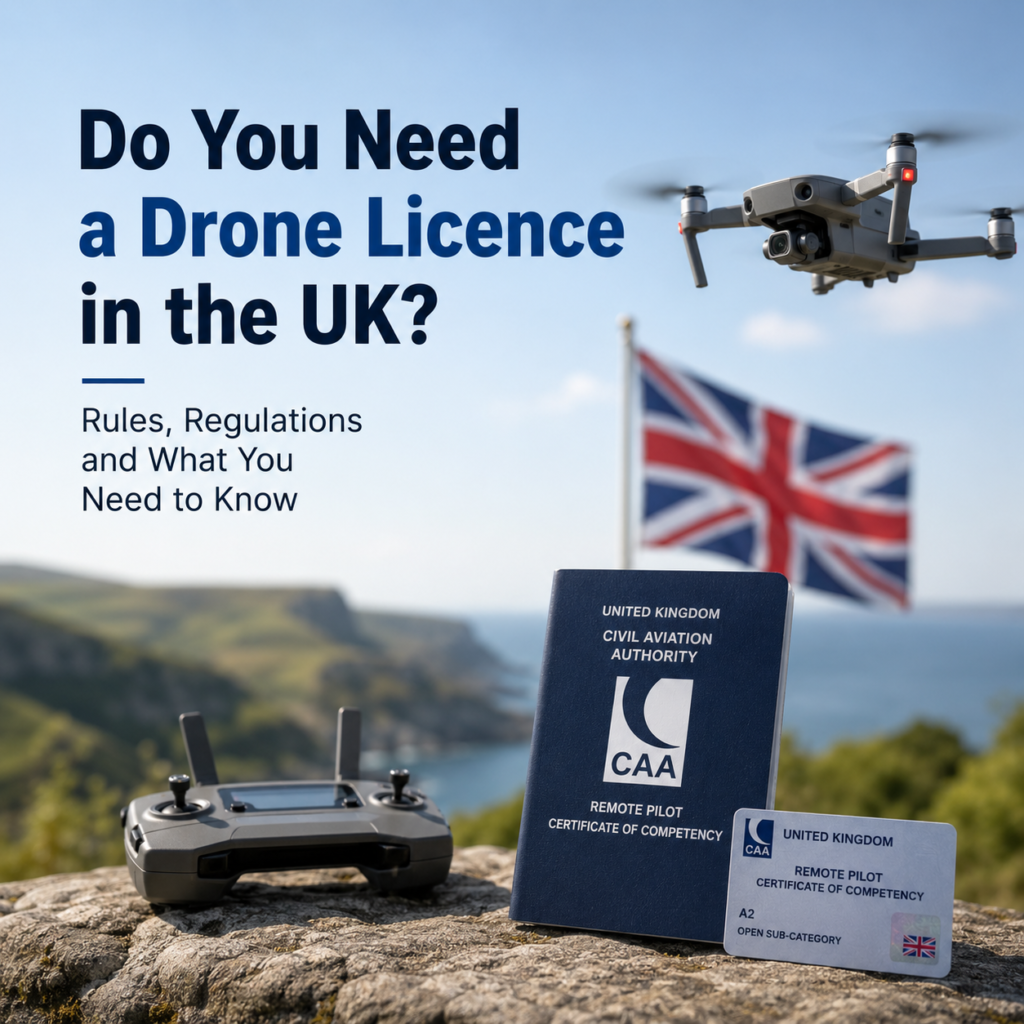
The UK’s drone laws are managed by the Civil Aviation Authority (CAA). These rules are designed to protect people, property, and other airspace users while still allowing drone enthusiasts and commercial operators to enjoy the benefits of flying.
One of the most important things to know is that not every drone pilot needs a traditional licence. However, many pilots do need to complete online registration and training before flying legally. The exact requirements vary depending on whether your drone is used for recreation, work, or advanced operations. For an official overview, the CAA drone registration guidance is the best place to start.
If you are new to drone flying, it can also help to read a practical beginner drone guide before you head out. A little preparation makes it easier to understand the rules and build good habits from the start.
Do you need a drone licence UK pilots should have?
For most recreational users, you do not need a formal pilot licence in the way you would for flying an aircraft. Instead, you may need to register as a drone operator and, in some cases, pass an online competency test.
If your drone weighs 250g or more, or if it has a camera, you generally need to register as an operator with the CAA. You may also need to complete the Flyer ID test, which checks your understanding of the basic rules for safe drone use.
For more advanced or commercial drone operations, the requirements can be stricter. Depending on what you are doing, you may need additional qualifications, an Operational Authorisation, or proof of competency.
Recreational drone flyers
If you are flying for fun, the main requirement is usually registration rather than a licence. If your drone is lightweight and does not have a camera, you may be exempt from some rules. But as soon as it weighs 250g or more, or is equipped with a camera, registration is typically required.
Commercial drone operators
If you are flying a drone as part of your business, such as for photography, surveying, inspection, or filming, you may need more than the basic online training. Commercial work often requires a deeper understanding of airspace, safety procedures, and operational risk. Depending on the type of flight, you may need to prove additional competence to the CAA.
Advanced flying operations
Some drone activities are more complex, such as flying beyond visual line of sight, operating near people in a higher-risk setting, or conducting specialised work in restricted environments. These operations may require specific permissions or a higher level of qualification. In these cases, the standard recreational registration process is not enough.
What is the difference between a licence, operator ID, and Flyer ID?
The term “licence” is often used loosely, but in UK drone law there are several different requirements that people sometimes confuse.
Operator ID
An Operator ID is required for the person or company responsible for the drone. This is the person who manages the drone and ensures it is used legally. It must be displayed clearly on the drone if required under the rules. This is usually needed if the drone weighs 250g or more, or has a camera.
Flyer ID
A Flyer ID is obtained by passing the CAA online theory test. This shows that you understand the basics of safe drone operation, including airspace awareness and safety rules. Anyone flying a drone that requires registration typically needs a Flyer ID.
Licence or operational approval
A true licence is generally associated with more advanced flying or commercial operations. This may involve additional certification, especially if you are working under specific permissions or using the drone in a higher-risk category.
Which drones need registration?
The UK has a simple weight-based framework that helps determine whether you need to register.
Drones under 250g
Very small drones can sometimes be flown with fewer requirements, but there are still important limits. If a drone under 250g has a camera, registration is usually required. Even where registration is not needed, pilots must still follow the safety rules and fly responsibly.
Drones 250g and above
Any drone at or above 250g typically requires operator registration. This is because heavier drones present a greater risk if something goes wrong. You will usually also need a Flyer ID.
Drones with cameras
If your drone has a camera, registration is often required regardless of weight. This is because camera-equipped drones are treated more carefully under privacy and safety rules.
Where can you legally fly a drone in the UK?
Knowing whether you need a licence is only part of the picture. You also need to know where flying is permitted.
Keep your drone in sight
In most cases, you must keep your drone within visual line of sight. That means you should be able to see it with your own eyes, not just through a screen or camera feed.
Avoid restricted areas
There are many places where drone flights are restricted or prohibited, including near airports, airfields, prisons, and certain urban areas. Some sites may also have local restrictions in place. It is always wise to check official maps and local guidance before flying.
Respect people and property
You must not fly in a way that endangers others. This includes not flying over crowds, staying away from private property without permission, and being mindful of nuisance and privacy concerns.
When you are planning a flight, it is worth checking the official rules and local notices before you take off. For a reliable reference point, the UK government’s flying drones and model aircraft guidance explains the main safety expectations in plain language.
What happens if you fly without the proper requirements?
Flying a drone without the right registration or approval can lead to enforcement action. Penalties can include fines, confiscation of equipment, and in serious cases, prosecution. Beyond the legal risk, unsafe drone use can cause accidents, disturb wildlife, and put people in danger.
Even if your drone is small or you are only flying for fun, it is still your responsibility to understand the rules. The CAA expects drone pilots to stay informed and fly safely.
How to stay compliant as a drone pilot
Staying compliant does not have to be complicated. A few simple habits can make a big difference.
Check the latest CAA guidance
Drone regulations can change, so it is worth checking the most current guidance before you fly. This is especially important if you plan to use your drone for work or in unfamiliar locations.
Register if required
If your drone falls into the registration category, complete the process before your first flight. Keep your Operator ID and Flyer ID details up to date.
Read the drone’s manual
Different drones have different features, limits, and safety settings. Understanding your equipment helps you fly more confidently and avoid mistakes.
Plan every flight
Before takeoff, assess the location, weather, obstacles, and people nearby. A little planning can prevent most common problems.
If you want a broader overview before choosing your first aircraft, our beginner drone guide can help you compare basic setup, handling, and safety steps without getting overwhelmed.
Special considerations for children and beginners
You do not need to be a professional to fly a drone safely, but beginners should take extra care. Children can fly drones, but an adult is often responsible for registration and supervision depending on the drone and circumstances. Beginners should start in open, low-risk spaces and avoid busy or restricted areas until they are confident.
A smaller, lightweight drone can be a good starting point, but even the simplest model still needs to be flown responsibly. Practice basic manoeuvres, understand the controls, and get familiar with safety features before attempting more complex flights.
If you are just starting out, it helps to build good habits from the beginning. Learn how to check battery levels, confirm GPS lock, and understand return-to-home settings before every flight. Those small steps can reduce avoidable mistakes and make flying far safer.
It is also worth remembering that weather matters. Strong winds, rain, and poor visibility can make a drone harder to control, even if you are flying a lightweight model. Choosing calm, clear conditions gives beginners a much better chance of staying within the rules and avoiding unnecessary risks.
When flying around other people, keep your distance and be ready to land if the area becomes busy. A responsible pilot does not just focus on the aircraft; they also pay attention to what is happening around them.
For many new drone owners, the safest approach is to treat the first few flights as practice sessions. Use open ground, stay low, and get comfortable with the controls before trying more advanced movements or camera work. That extra patience pays off with better control and fewer surprises.
What commercial drone users should double-check
Business users often have a few more things to consider than hobby flyers. If you use a drone for photography, inspections, mapping, or marketing, you should think carefully about the purpose of each flight, the location, and the risk to others. In some cases, the work may fall into a category that requires specific approval or additional evidence of competence.
It is also sensible to keep records of your flights, maintenance checks, and training. Good documentation can help you show that you have taken the proper steps if questions ever arise. For commercial operators, compliance is not just about avoiding penalties; it is also about protecting clients, staff, and the public.
If your work involves flying near buildings, roads, or events, the planning stage becomes even more important. You may need to assess takeoff and landing areas, look for radio interference, and consider what would happen if you had to abort the flight quickly. A structured approach makes it easier to operate safely and professionally.
If your business also uses drones for inspections, mapping, or other specialist tasks, a thermal drone guide can be useful for understanding a common commercial use case and the extra care that comes with more advanced flying.
Why registration and licensing are often confused
Many people use the word “licence” when they really mean registration or training. That confusion is understandable because different drone rules can overlap. In simple terms, operator registration identifies who is responsible for the drone, Flyer ID shows that the pilot understands the basic rules, and a licence or more formal approval is only relevant in more advanced situations.
This distinction matters because it helps pilots focus on the right requirement instead of assuming they need the same kind of licence used for manned aircraft. For most people, compliance starts with knowing whether the drone needs to be registered and whether the pilot needs to pass the online test.
If you are unsure which category your drone falls into, check the drone’s weight, whether it carries a camera, and how you intend to use it. Those three details usually narrow down the answer quickly.
Quick answers for common drone licence UK questions
For most people, the simplest answer to the drone licence UK question is that registration matters more often than a formal licence. If you are flying for leisure, you may only need an Operator ID and, in many cases, a Flyer ID. If you are flying for business or in more complex situations, you may need extra approval or evidence of competence.
Many new pilots search for drone licence UK because they want a clear yes or no answer, but the rules depend on the drone, the flight type, and the location. That is why it helps to check the CAA guidance before each new setup or flight plan. A few minutes of review can prevent bigger problems later.
It is also sensible to remember that drone licence UK requirements can change as your flying becomes more advanced. A drone that is fine for casual use may need more formal approval if you begin working near people, near restricted airspace, or on commercial jobs. The safest approach is always to confirm the requirements before you rely on the aircraft for a trip, project, or client task.
If you are still unsure whether your setup needs registration, the drone’s weight and camera are the quickest things to check. Those details, along with your intended use, usually determine whether a simple online test is enough or whether you need additional permission.
Helpful next steps before your first flight
Before taking off, make sure the drone is charged, the controller is paired, and your flight area is suitable. Then review the local restrictions, check for people nearby, and choose a wide, open space if possible. These steps are especially useful if you are learning the basics or trying a new drone for the first time.
For beginners, it can also help to practise with short flights and simple manoeuvres before attempting anything more complex. Once you are comfortable hovering, turning, and landing, you can gradually build confidence while still staying within the rules.
For readers comparing different uses, our agricultural drones guide can also show how practical drone flying changes when the job becomes more specialised.
Simple pre-flight checklist
- Confirm whether the drone needs operator registration.
- Make sure the pilot has the right Flyer ID or training.
- Check weather, visibility, and wind conditions.
- Look for airports, restricted zones, and local limitations.
- Inspect the drone, propellers, battery, and controller.
- Plan your takeoff, landing, and emergency landing spots.
- Keep the drone in sight and respect nearby people and property.
Final thoughts
In the UK, you usually do not need a traditional licence just to fly a drone for leisure. However, many drone pilots do need to register, obtain a Flyer ID, or meet additional requirements depending on the drone and the type of flying involved. The key is to understand the difference between registration and licensing, and to follow the CAA rules every time you fly.
Whether you are using a drone for recreation, photography, or business, responsible flying starts with knowing the law. Check your drone’s weight, confirm whether registration is needed, and make sure your chosen location is safe and legal. With the right preparation, you can enjoy drone flying while staying compliant and protecting the people and places around you. If you keep the rules in mind, a drone licence UK search does not have to be confusing at all.

Add comment