
Agriculture has always evolved with technology. From the plow to the tractor to precision GPS-guided machinery, each major innovation has helped farmers work faster, reduce waste, and improve yields. One of the most important recent developments is the agricultural drone.
Agricultural Drones, also called agriculture UAVs or farm drones, are transforming how growers monitor crops, manage inputs, and make decisions. What once required long hours of field walking or expensive manned aircraft can now be done from the air with high accuracy and much less effort.
Today, drones are used for crop scouting, mapping, spraying, irrigation planning, plant health monitoring, livestock management, and more. They are no longer a futuristic idea—they are a practical tool in many farms around the world.
This article explores what agricultural drones are, how they work, their main uses, benefits, limitations, and what the future may hold for this technology.
Table of Contents
What Is an Agricultural Drone?
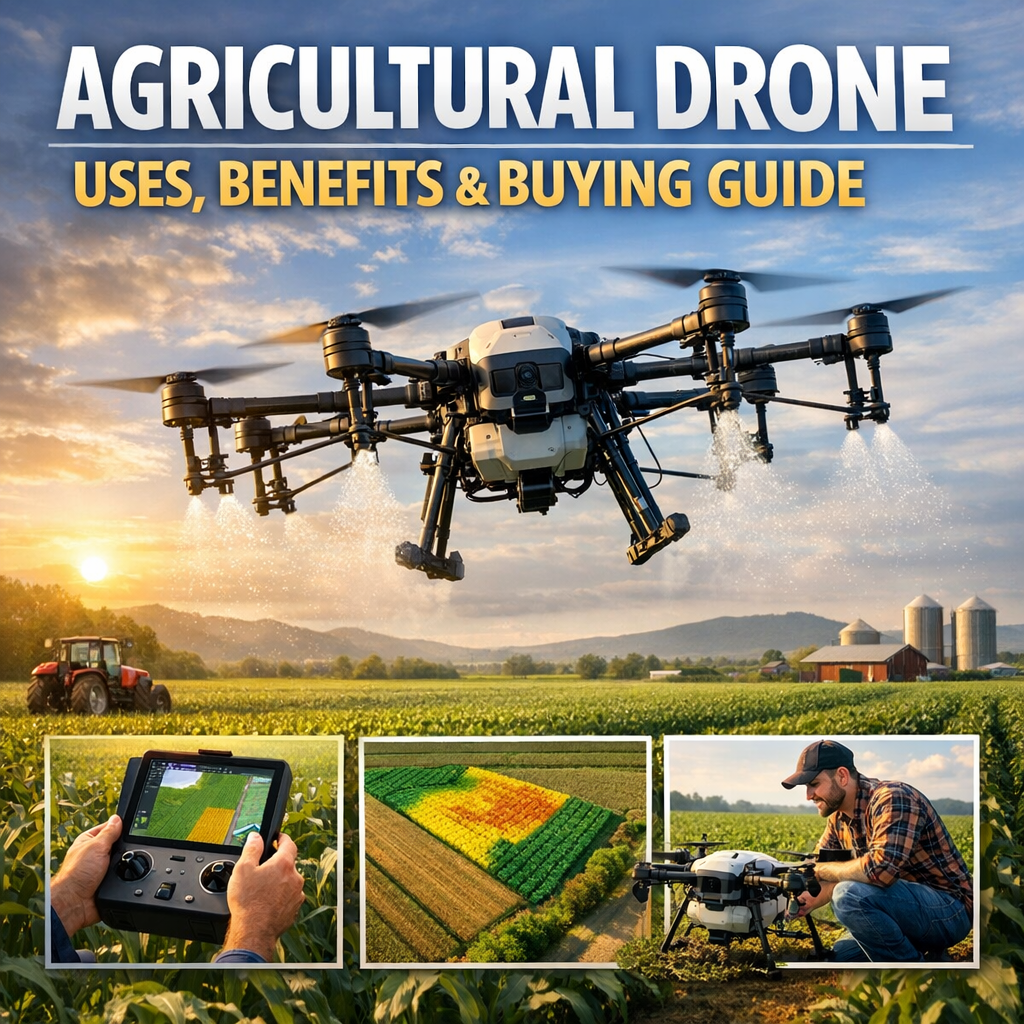
An agricultural drone is an unmanned aerial vehicle designed to support farming operations. Unlike hobby drones used mainly for photography, agricultural drones are built with specialized hardware and software for tasks such as:
- Capturing aerial images and field data
- Monitoring crop health
- Detecting pest or disease outbreaks
- Mapping soil and irrigation conditions
- Spraying fertilizers, pesticides, or herbicides
- Assessing plant growth and yield potential
Some drones are lightweight and used primarily for observation. Others are larger, more powerful machines designed to carry tanks of liquid for spraying. Many advanced models use multispectral or thermal sensors that can detect changes in crops invisible to the human eye.
Why Agricultural Drones Matter
Farming has always required good timing and accurate information. Decisions about planting, watering, fertilizing, and harvesting can affect the entire season’s results. Traditional field scouting, while useful, is time-consuming and may miss problems in large or complex fields.
Agricultural Drones solve several of these challenges by giving farmers a faster and broader view of their land. They can cover dozens or even hundreds of acres in a short time, allowing growers to find problems early and respond quickly.
Key reasons drones matter in agriculture
- They improve decision-making with real-time data
- They reduce manual labor
- They help detect issues before they spread
- They can reduce chemical waste through targeted application
- They support sustainable and efficient farming practices
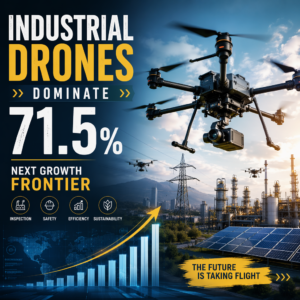
As farms become larger and resources more expensive, the value of precision tools like drones continues to grow. For a broader look at how aerial systems are reshaping operations, see our complete guide to industrial drone applications.
Types of Agricultural Drones
Not all agricultural drones serve the same purpose. Different types are designed for different jobs.
1. Mapping and scouting drones
These drones are used to survey fields and collect aerial images. They often carry RGB cameras, multispectral sensors, or thermal cameras. Their main job is to help farmers understand crop conditions, identify patterns, and detect early signs of stress.
2. Spraying drones
Spraying drones are fitted with tanks, pumps, nozzles, and flight systems designed to distribute liquids accurately. They are used to apply fertilizers, herbicides, fungicides, or pesticides across fields. Some models can carry large payloads and operate autonomously over predefined routes.
3. Multispectral and thermal drones
These drones are especially useful for crop health analysis. Multispectral sensors capture light beyond what the human eye can see, such as near-infrared and red-edge wavelengths. Thermal drones can detect temperature variations, which may reveal irrigation problems or plant stress.
4. Fixed-wing drones
Fixed-wing drones resemble small airplanes. They are efficient for surveying large areas because they can stay airborne longer than multirotor drones. However, they are less maneuverable and usually need more space for takeoff and landing.
5. Multirotor drones
These are the most common agricultural drones. They have multiple rotors, can hover in place, and are ideal for detailed inspections and spraying in smaller or irregular fields. Their stability makes them easy to control in tight spaces.
How Agricultural Drones Work
At a basic level, agricultural drones fly over fields and collect data through sensors and cameras. The information is then processed using specialized software that helps farmers interpret what is happening in the crop.
The workflow often looks like this:
- Plan the mission – The operator chooses the area to survey or spray.
- Launch the drone – The drone follows a pre-programmed route or is controlled manually.
- Capture data – Cameras and sensors record images, temperature, or vegetation indices.
- Analyze results – Software creates maps, reports, or alerts.
- Take action – The farmer uses the information to irrigate, spray, fertilize, or inspect specific areas.
Many agricultural drones are integrated with GPS and autonomous flight planning software, making them highly precise. Some can fly the same route repeatedly, which allows growers to compare field conditions over time.
Main Uses of Agricultural Drones
Agricultural Drones are incredibly versatile. Their applications go beyond simple photography and can affect nearly every stage of farming.
Crop scouting and monitoring
One of the most common uses of drones is crop scouting. Instead of walking long rows by hand, farmers can use drones to scan entire fields quickly. This helps identify:
- Areas with poor emergence
- Water stress
- Pest damage
- Nutrient deficiencies
- Disease hotspots
- Weed pressure
Aerial monitoring is especially valuable in large farms where manual inspection would take too long.
Precision spraying
Spraying drones can apply chemicals with impressive accuracy. Because they can target specific areas, they may reduce chemical use and minimize drift. This is useful for controlling weeds, pests, and diseases while avoiding unnecessary application in healthy zones.
Precision spraying also helps farmers reach areas that may be difficult for ground equipment, such as wet fields, steep terrain, or crops that are tall and dense.
Irrigation management
Water management is one of the biggest concerns in agriculture. Drones equipped with thermal sensors can help identify dry patches, leaks, or uneven irrigation. By showing which areas are under stress, drones support more efficient water use and can help reduce waste.
Plant stand and emergence assessment
After planting, growers need to know whether seeds emerged properly and whether plant spacing is uniform. Drones can quickly survey the field to reveal gaps, poor stands, or areas affected by planting equipment issues.
Yield estimation
By tracking crop development over time, drones can help estimate likely yield. They do this by measuring plant density, vigor, and growth patterns. While yield prediction is not perfect, drone data can improve planning and help farmers prepare for harvest and storage needs.
Livestock monitoring
Although drones are often associated with crops, they are also used in livestock operations. Farmers can use them to locate animals, inspect fences, monitor grazing patterns, and check water sources. This saves time and reduces the need to drive across large properties.
Soil and field analysis
Drones can help identify soil variability, erosion, drainage issues, and field boundaries. This information is useful for planning planting strategies and applying inputs more efficiently.
Benefits of Agricultural Drones
Agricultural Drones provide a wide range of advantages for modern farming operations.
Faster data collection
A drone can cover a large field in a fraction of the time needed for manual scouting. This speed matters when problems like pest outbreaks or disease spread rapidly.
Better accuracy
With GPS-guided flights and high-resolution sensors, drones can capture very precise data. This allows farmers to identify problems at the exact location they occur.
Reduced labor
Farmers and agronomists no longer need to spend as much time physically walking fields. This frees up time for decision-making and action.
Lower input costs
By targeting only the areas that need treatment, drones can help reduce the use of fertilizers, pesticides, and water. Over time, this can lead to significant savings.
Improved sustainability
Drones support precision agriculture, which aims to use resources more efficiently. This can reduce environmental impact by limiting runoff, over-application, and waste.
Access to hard-to-reach areas
Wet fields, steep slopes, and dense crops can be difficult for tractors or foot scouting. Drones can inspect these areas without damaging crops or getting stuck.
Timely decision-making
Because drones can be deployed quickly, farmers can respond to changing conditions sooner. Early detection often means smaller problems and better outcomes.
Challenges and Limitations
Even though agricultural drones are powerful tools, they are not perfect. There are several challenges to consider.
Initial investment
High-quality agricultural drones can be expensive. In addition to the drone itself, farmers may need software, sensors, batteries, training, and maintenance.
Battery life
Many drones have limited flight time, especially spraying models that carry heavier loads. This means larger fields may require multiple flights or extra batteries.
Weather dependence
Wind, rain, fog, and extreme temperatures can all affect drone performance. Flights may need to be delayed during poor weather.
Data interpretation
Capturing data is only part of the process. Farmers must also understand what the data means and how to act on it. Without proper analysis, drone images may not translate into better decisions.
Regulatory requirements
Drone use is often subject to aviation rules, licensing, and operational restrictions. These regulations vary by country and may limit where and how drones can fly.
Training needs
Operating agricultural drones effectively requires skill. Pilots need to understand flight planning, safety procedures, image analysis, and equipment maintenance.
For a quick look at consumer drone capabilities that often influence farm buyers, the 4K drone buying guide is a useful reference.
Agricultural Drone Technology: What Makes It Effective?
Several technologies make agricultural drones especially useful.
GPS and autonomous flight
GPS enables drones to follow precise paths across fields. Autonomous flight systems allow them to repeat surveys exactly, making comparisons over time more reliable.
High-resolution cameras
Detailed imagery helps detect subtle differences in crop color, texture, and spacing. This is important for spotting trouble early.
Multispectral sensors
These sensors measure light in bands beyond visible colors. Farmers can use the resulting vegetation indices to evaluate plant vigor and stress levels.
Thermal imaging
Thermal cameras detect temperature differences that may point to irrigation problems, disease, or poor plant function.
AI and analytics software
Many platforms now use artificial intelligence to process images and flag anomalies automatically. This reduces the time needed to review data and helps prioritize action.
Cloud connectivity
Some systems upload data to cloud platforms where it can be shared with agronomists, advisors, and farm managers. This makes collaboration easier and speeds up decision-making.
Real-World Examples of Agricultural Drone Use
To understand the practical value of agricultural drones, it helps to look at real-world examples.
Corn and soybean farms
On large row-crop farms, drones are used to monitor emergence, assess weed pressure, and detect nutrient deficiencies. A farmer may discover from drone imagery that a section of the field has poor drainage and needs a different management approach next season.
Vineyards
In vineyards, drones can track vine vigor, identify irrigation issues, and support disease management. Because grape quality depends heavily on consistency, aerial monitoring can be extremely valuable.
Rice paddies
In wet rice fields, ground equipment may be limited. Drones can inspect crop stands and apply chemicals without compacting the soil.
Orchards
In orchards, drones help monitor tree health, identify pest outbreaks, and map variability across the canopy. This is especially useful where trees are tall and difficult to inspect from the ground.
Livestock ranches
Ranchers use drones to locate cattle, inspect fences, and monitor water tanks. A drone flight can save hours of driving across remote land.
How Agricultural Drones Support Precision Agriculture
Precision agriculture is the practice of managing fields based on detailed data rather than treating every area the same. Agricultural drones are a natural fit for this approach.
Instead of applying the same amount of fertilizer or pesticide across an entire field, a farmer can use drone data to identify zones with different needs. This creates opportunities for:
- Variable-rate application
- Targeted spraying
- Site-specific irrigation
- Focused scouting
- Smarter harvest planning
Precision agriculture reduces waste and improves efficiency. Drones provide the aerial intelligence that makes it possible.
Choosing the Right Agricultural Drone
Selecting the best agricultural drone depends on the farm’s size, goals, and budget. A small specialty farm may need a lightweight mapping drone, while a large row-crop operation may benefit from a heavy-duty spraying system.
Factors to consider
- Purpose: scouting, mapping, spraying, or livestock monitoring
- Payload capacity: especially important for spraying drones
- Flight time: longer battery life means more acreage covered
- Sensor quality: RGB, multispectral, thermal, or all three
- Ease of use: user-friendly software and control systems
- Durability: ability to withstand field conditions
- Support and maintenance: local service and spare parts availability
- Regulatory compliance: whether the drone meets local operating rules
It is often better to choose a drone based on a clear use case rather than buying the most advanced model available.
Best Practices for Using Agricultural Drones
To get the most out of drone technology, farmers should follow a few best practices.
Plan flights carefully
Choose the right time of day, weather conditions, and flight path. Early morning or late afternoon flights often provide more consistent light for imaging.
Calibrate sensors
Sensors should be calibrated correctly to ensure accurate results. Poor calibration can lead to misleading data.
Keep equipment maintained
Clean cameras, inspect propellers, charge batteries properly, and check for software updates. Regular maintenance reduces failures and extends the drone’s life.
Store and organize data
Drone data is only useful if it can be compared over time. Keep records organized by field, date, crop type, and problem area.
Combine drone data with field knowledge
Aerial imagery should be interpreted alongside soil tests, weather reports, and agronomic expertise. Drones are powerful, but they work best as part of a broader decision-making system.
The Future of Agricultural Drones
Agricultural Drones are still evolving rapidly. In the coming years, they are likely to become even more capable, affordable, and integrated into farm management systems.
More automation
Future drones may require less manual input and handle more tasks independently, from flight planning to data analysis.
Smarter AI
Artificial intelligence will likely improve the ability to identify crop diseases, nutrient stress, and pest damage automatically.
Better batteries and payloads
Advances in battery chemistry and aircraft design may extend flight times and increase carrying capacity, especially for spraying models.
Integration with farm machinery
Drones may become part of a larger connected farm ecosystem, working with tractors, irrigation systems, and sensors in the field.
Greater accessibility
As the technology matures, more small and medium-sized farms may be able to adopt drone solutions at a lower cost.
The long-term trend is clear: drones will play an increasingly important role in how farms are managed.
Conclusion
Agricultural Drones are reshaping farming by giving growers faster access to field data, more precise application tools, and better decision-making power. Whether used for scouting, spraying, irrigation management, or livestock monitoring, they offer practical benefits that can save time, lower costs, and improve yields.
Like any technology, drones are most effective when used with knowledge, planning, and proper equipment. But for farmers looking to improve efficiency and embrace precision agriculture, the agricultural drone has become one of the most valuable tools available today.
As farming continues to face pressure from climate change, rising input costs, labor shortages, and the need for sustainable production, drones are likely to become not just useful, but essential. For current drone safety and operating rules, review the FAA’s official guidance on unmanned aircraft systems.



Add comment