
Bulk drone procurement looks simple from the outside: find a supplier, place a large order, negotiate a better price, and move inventory. In reality, wholesale drone buying is more complicated. New wholesalers often underestimate compliance, product quality, after-sales support, and market fit. That is why so many first-time buyers run into costly mistakes before their business even gains traction.
The drone industry continues to expand across consumer, commercial, agricultural, and industrial segments. This growth has created real opportunity for wholesalers, but it has also created confusion. Many newcomers rely on assumptions instead of a solid procurement strategy, and those assumptions often lead to overstocked warehouses, failed launches, and dissatisfied customers. Understanding the most common myths about bulk drone procurement can help wholesalers avoid those pitfalls and make smarter purchasing decisions from the start.
Why Bulk Drone Procurement Is Harder Than It Looks
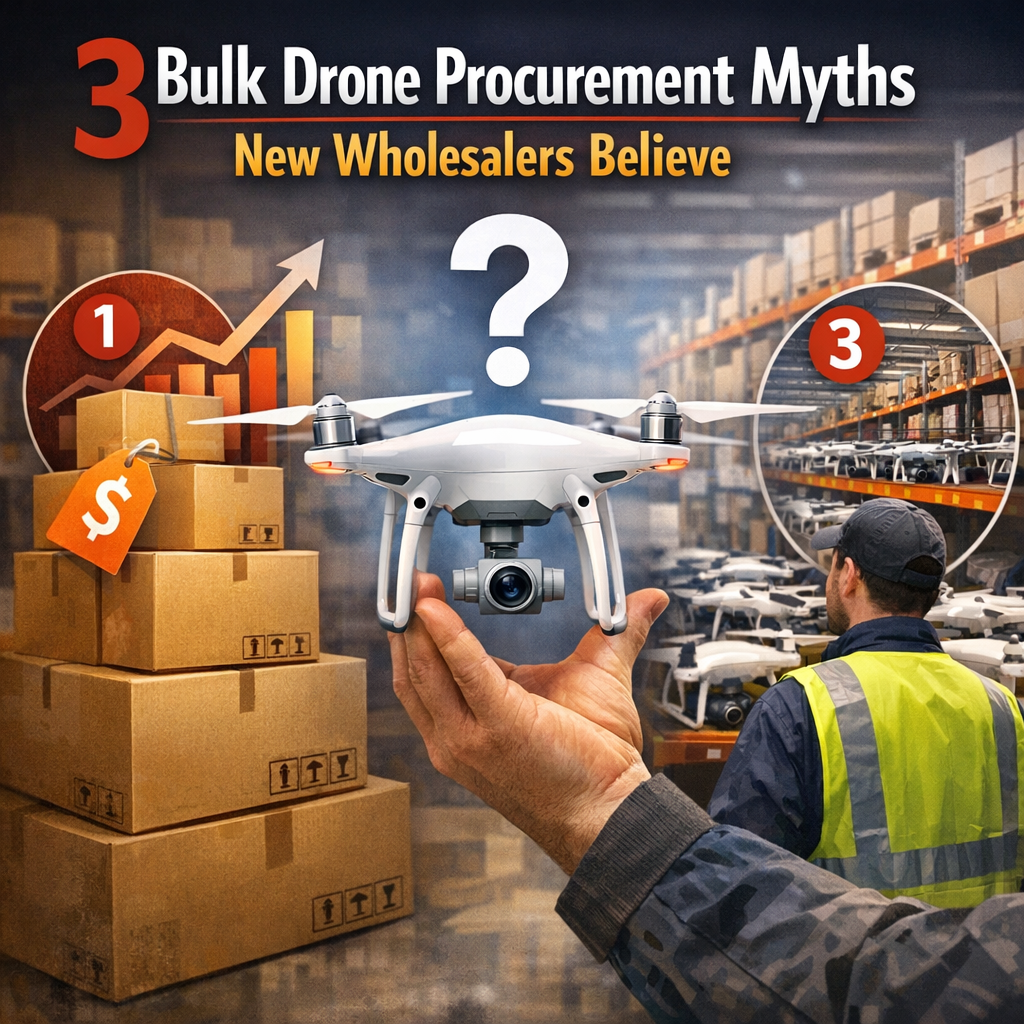
Buying drones in bulk is not the same as ordering generic electronics or accessories. Drones combine hardware, software, batteries, sensors, radio systems, and in many cases regulatory requirements. A drone that looks profitable on a catalog page may be difficult to import, difficult to support, or difficult to sell in your target market.
Wholesalers also face a unique balance between price and performance. A cheaper unit may appear attractive at first, but hidden defects, weak flight stability, short battery life, or limited firmware support can quickly turn a bargain into a liability. For new distributors, success depends on understanding the total procurement picture, not just the unit cost.
Myth 1: The Lowest Unit Price Always Means the Best Deal
One of the most common mistakes new wholesalers make is focusing almost entirely on the per-unit price. At first glance, a low-cost drone seems like the safest way to maximize margin. But in bulk purchasing, the cheapest option is rarely the best overall value.
The Hidden Costs of “Cheap”
A low unit price can hide several expensive problems:
- Higher defect rates
- Inconsistent production quality
- More returns and warranty claims
- Poor customer reviews
- Limited or nonexistent technical support
- Incomplete documentation or certification gaps
If even a small percentage of the shipment arrives with issues, the true cost of the order rises quickly. For example, replacing damaged inventory, handling customer complaints, and paying for reverse logistics can erase the margin you expected to make.
Better Procurement Thinking
Instead of asking, “What is the cheapest drone I can buy?” ask, “What is the most profitable product over its full lifecycle?” That means evaluating:
- Reliability of the manufacturer
- Warranty terms
- Spare parts availability
- Battery quality
- Flight performance consistency
- Packaging durability during shipping
Wholesalers who think in terms of landed cost and customer satisfaction usually make better long-term decisions than those chasing the lowest sticker price.
Myth 2: All Drones Are Basically the Same
Another dangerous assumption is that drones are interchangeable. New wholesalers often believe that if a drone has similar specs on paper, it will perform similarly in the market. In reality, drone categories vary dramatically, and so do buyer expectations.
Different Markets Want Different Features
A drone for hobbyists is not the same as a drone for surveying, inspection, agriculture, or security. Even within consumer models, buyers may prioritize very different features:
- Camera resolution
- Flight time
- Gimbal stabilization
- Obstacle avoidance
- Remote range
- App compatibility
- Portability and foldability
Commercial customers tend to care more about reliability, payload support, mapping precision, and compliance documentation. Retail buyers may care more about ease of use, design, and price. If a wholesaler stocks the wrong mix, inventory can sit unsold for months.
Spec Sheets Do Not Tell the Whole Story
A product listing may advertise impressive numbers, but numbers alone do not guarantee market success. Flight time, for instance, depends on payload, weather, firmware, and user behavior. Camera resolution does not automatically mean good image quality. Range claims can vary widely depending on signal conditions.
Before placing a bulk order, wholesalers should test sample units, compare competitor offerings, and study customer reviews in their target segment. The goal is to find products that are genuinely suitable for the audience, not just impressive on paper.
Myth 3: Once You Find a Supplier, the Hard Part Is Over
Many new wholesalers assume that the procurement process ends when they sign the purchase order. In practice, that is only the beginning. Supplier selection is important, but ongoing supply chain management is just as critical.
Why Supplier Due Diligence Matters
Not every manufacturer or trading company can support a stable wholesale business. A supplier may offer good samples and then struggle with consistency during larger production runs. Some may communicate well during the sales process but become unresponsive when issues arise.
Before committing to a bulk order, wholesalers should evaluate:
- Manufacturing capacity
- Quality control processes
- Lead time consistency
- Certification and compliance records
- Reference customers or trade history
- Packaging and shipping standards
A reliable supplier should be able to explain how it handles defect rates, replacement parts, firmware updates, and after-sales support.
Logistics and Compliance Can Change the Outcome
Drones are subject to import rules, battery transport restrictions, and, in some markets, product registration or certification requirements. These issues can delay shipments or block sales entirely if ignored. A wholesaler who buys without checking local regulations may discover that the products cannot be marketed the way they expected.
It is also important to consider warehousing and fulfillment. Drones are fragile and often include lithium batteries, so they require careful handling. Poor packaging or long transit times can damage inventory before it ever reaches the customer.
What Smart Wholesalers Do Differently
Successful bulk buyers avoid assumptions and build a procurement process around validation. They do not rely on marketing claims alone. Instead, they combine testing, market research, and supplier vetting to reduce risk.
They Start With Market Demand
Before ordering large quantities, experienced wholesalers confirm demand by answering questions like:
- Who is the target customer?
- What price range sells best?
- Which features matter most?
- Which brands are competitors already moving?
- Are there seasonal buying patterns?
This step helps prevent overbuying products that look promising but do not match actual market demand.
They Order Samples and Run Real Tests
A sample unit can reveal issues that spec sheets miss. Wholesalers should test:
- Flight stability
- Battery performance
- Camera quality
- App usability
- Return-to-home behavior
- Durability under normal handling
Testing should also include packaging inspection, since poorly protected products can arrive damaged even if the drone itself is well made.
They Build Strong Supplier Relationships
A good supplier relationship is more than a one-time transaction. Communication about forecasts, product updates, and quality issues can improve pricing and reduce risk over time. Wholesalers who maintain strong relationships are often better positioned to request custom packaging, branded accessories, or better payment terms later.
The Real Risk: Confusing Speed With Strategy
Bulk drone procurement often moves quickly because opportunities in the market can appear and disappear fast. That pressure can tempt new wholesalers to buy first and validate later. But speed without strategy is a common cause of failure.
The best wholesalers understand that procurement is not just about placing orders. It is about building a sustainable product pipeline. That requires careful evaluation of quality, compliance, customer demand, and supplier reliability. When those elements are aligned, bulk purchasing becomes a competitive advantage instead of a gamble.
Conclusion
New wholesalers fall for myths about bulk drone procurement because the industry looks simpler than it is. The first myth is that the cheapest unit price guarantees the best deal. The second is that all drones are interchangeable. The third is that finding a supplier solves the entire problem. In reality, successful wholesale buying depends on full-cost thinking, market-specific product selection, and continuous supplier management.
Those who take the time to test samples, verify compliance, and understand customer demand are far more likely to build profitable drone inventory. In a market that rewards both precision and speed, informed procurement is one of the most valuable skills a wholesaler can develop.



Add comment