
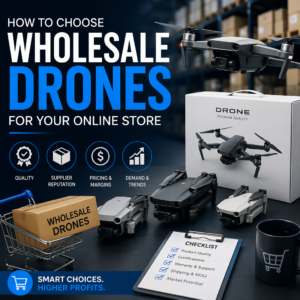
Finding a reliable drone wholesale supplier is one of the most important decisions a B2B buyer can make. The right partner can help you maintain product quality, protect margins, reduce fulfillment issues, and scale with confidence. The wrong one can create delays, customer complaints, warranty disputes, and hidden costs that damage your business. Because the drone market moves quickly and product specifications vary widely, buyers need a structured way to assess vendors before placing large orders. A strong B2B evaluation framework helps you compare suppliers fairly, ask the right questions, and identify which drone wholesale supplier can truly support long-term growth.
Why Supplier Vetting Matters in the Drone Industry
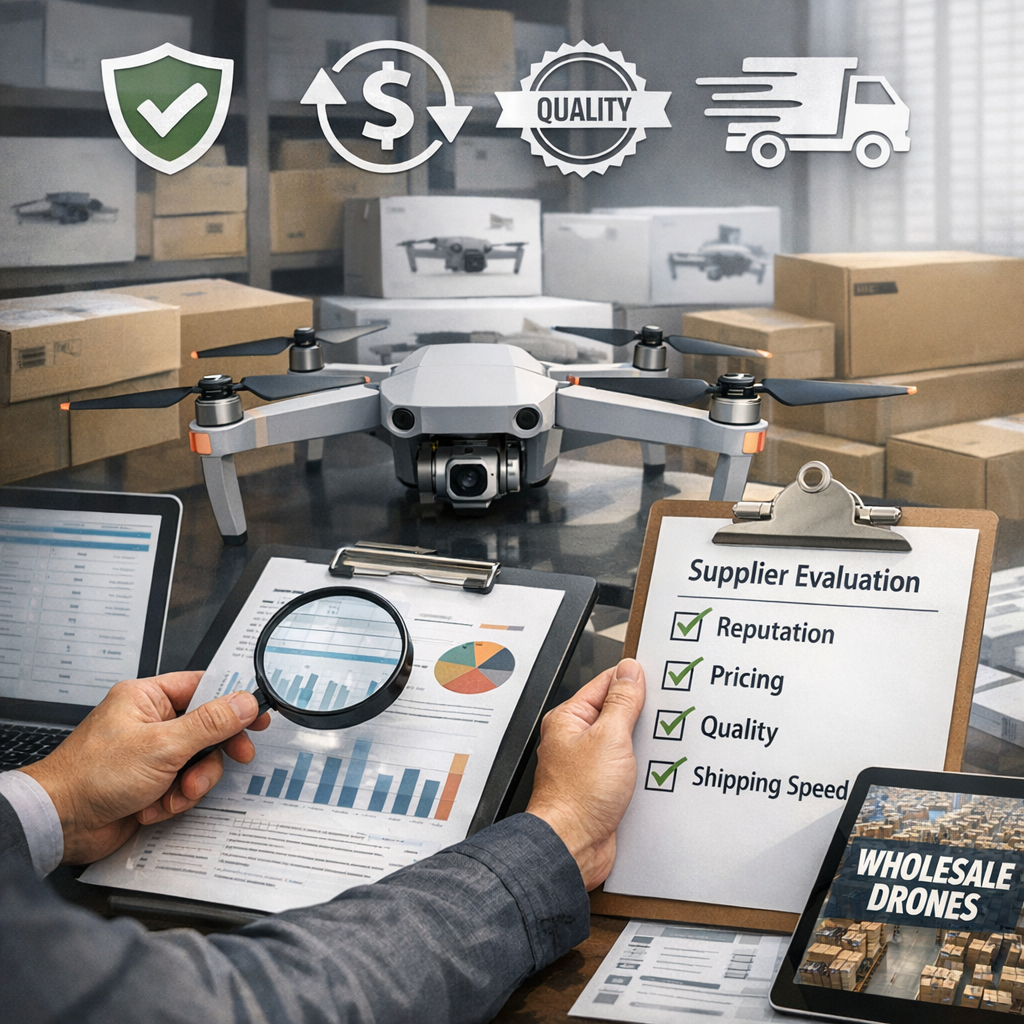
Drones are not ordinary consumer products. They often include sensitive electronics, batteries, firmware, camera systems, flight controls, and regulatory considerations that affect where and how they can be sold. This makes supplier selection more complex than simply comparing price sheets.
A dependable wholesale partner should offer more than low unit costs. They should provide consistent manufacturing standards, stable inventory, clear compliance documentation, and after-sales support. In a category where product returns and defects can be costly, even a small quality issue can quickly erode profit. That is why due diligence is essential before committing to a supplier relationship.
Start With Business Legitimacy
Before reviewing product catalogs or negotiating pricing, verify that the supplier is a legitimate business with a real operational footprint.
Check Company Registration and History
Ask for the company’s legal name, registration number, business license, and years in operation. A reputable supplier should be willing to share this information without hesitation. Look for consistency across documents, website details, and trade profiles. If the company claims extensive experience, confirm that its background aligns with that claim.
Review Physical Presence and Operations
Determine whether the supplier owns a factory, operates as a manufacturer, works as a trading company, or combines both models. Each setup has advantages and risks. Manufacturers may offer better control over production, while trading companies may provide broader product selection and lower minimum order quantities. What matters most is transparency about how the business actually operates.
Evaluate Product Quality at the Source
Product quality is the foundation of any trustworthy wholesale relationship. In the drone industry, quality should be assessed at both the component level and the finished product level.
Request Samples Before Bulk Orders
Never place a large order without testing samples. Use the sample stage to evaluate build quality, flight stability, battery performance, camera clarity, controller responsiveness, packaging, and user instructions. If possible, test multiple samples from different batches to see whether quality is consistent.
Ask About Quality Control Processes
A reliable supplier should have documented inspection steps in place. These may include incoming material checks, in-process inspections, final product testing, and pre-shipment verification. Ask whether they test motors, ESCs, batteries, signal range, app connectivity, and GPS functions. The more detailed and specific their process, the more confidence you can have in their operations.
Confirm Defect and Return Policies
Even strong suppliers experience occasional defects. What matters is how they handle them. Review policies for replacements, refunds, repair support, and how defective units are documented. Clarify who pays for return shipping and whether claims are handled by batch or by individual unit. Clear procedures reduce friction later.
Assess Compliance and Certification Readiness
Drone sales are often shaped by aviation rules, wireless communication standards, battery transport rules, and product safety requirements. A good wholesale supplier should understand these obligations and provide the right documents.
Verify Required Certifications
Depending on your target market, ask for documents such as CE, FCC, RoHS, or other applicable certifications. If your products include lithium batteries, make sure the supplier can provide shipping and safety documentation needed for transport. For certain markets, additional regulatory or customs paperwork may be required.
Check Market-Specific Compliance Knowledge
A strong supplier should know the requirements for the regions they serve. If you plan to sell in North America, Europe, or the Middle East, ask how they support compliance for those destinations. This includes labeling, user manuals, packaging language, and local restrictions. Suppliers with international experience can help you avoid costly import or marketplace issues.
Evaluate Pricing Beyond the Unit Cost
Price matters, but wholesale buyers should never judge a supplier on the listed unit rate alone. Total landed cost and business terms matter more.
Compare MOQ, Tiered Pricing, and Lead Times
Look carefully at minimum order quantities, price breaks, production lead times, and restock timelines. A lower unit price may not be attractive if the MOQ is too high or the lead time is too long. Ask how pricing changes with volume and whether repeat orders receive better terms.
Identify Hidden Costs
Some suppliers advertise low prices but add costs for samples, custom packaging, firmware changes, labeling, or quality inspections. Freight, insurance, customs support, and payment processing fees can also affect profitability. Ask for a complete cost breakdown so you can compare vendors accurately.
Review Communication and Responsiveness
A supplier’s communication style often reveals how they will behave after the first order is placed. Slow or vague responses during the evaluation stage may signal problems later.
Measure Clarity and Technical Knowledge
The best suppliers answer questions clearly and confidently. They should be able to explain product specifications, differences between models, battery options, component upgrades, and recommended use cases. If responses are generic or inconsistent, proceed with caution.
Observe Speed and Professionalism
Track how quickly the supplier replies and whether they follow up properly. Timely communication is especially important when dealing with production schedules, shipping issues, or warranty claims. Reliable suppliers treat communication as part of their service standard, not as an afterthought.
Examine Inventory Stability and Fulfillment Capability
A supplier may have excellent products on paper but still fail if they cannot fulfill orders consistently.
Ask About Stock Levels and Production Capacity
Find out whether the supplier keeps ready stock or manufactures on demand. For fast-moving drone models, inventory stability matters because delays can affect your sales cycle and customer satisfaction. If they produce at scale, ask about monthly capacity and how they handle peak demand periods.
Check Shipping and Logistics Support
Drone products are sensitive to shipping rules, especially when batteries are involved. Confirm whether the supplier has experience with air freight, sea freight, express shipping, and export packaging. A capable supplier should know how to minimize transit risk and reduce customs complications.
Inspect Reputation and Track Record
Supplier reputation can reveal how the business behaves in real transactions. This is especially useful when you cannot visit the facility in person.
Look for Third-Party Validation
Search for trade references, industry profiles, marketplace feedback, and client testimonials. While online reviews should be treated carefully, patterns of recurring complaints are worth noting. Look for signs of long-term relationships with distributors, resellers, or retail chains.
Request References When Appropriate
If you are placing a significant order, ask for references from existing B2B clients. Speaking to a current buyer can reveal how the supplier handles delays, product issues, revisions, and communication under pressure. Reliable suppliers are usually comfortable providing references.
Test Customization and Scalability
For many B2B buyers, the ideal drone wholesale supplier is one that can support branding, packaging, and feature customization as the business grows.
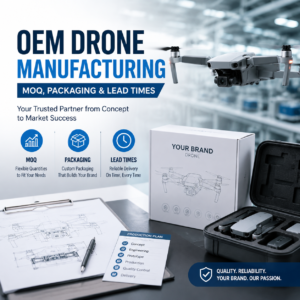
Confirm OEM and ODM Capabilities
If you need private labeling, custom colors, branded packaging, or modified technical features, ask whether the supplier offers OEM or ODM services. Make sure they can explain tooling costs, development timelines, and minimum order requirements for custom work.
Evaluate Long-Term Scalability
A supplier that works well for your first order should also be able to support future growth. Ask whether they can handle larger volumes, maintain consistent component sourcing, and keep product revisions stable over time. Frequent changes to design or parts can cause inventory headaches for resellers.
Build a Simple Scoring Framework
To make your evaluation more objective, create a scoring system for each supplier. Rate categories such as product quality, compliance, pricing, communication, logistics, and customization on a consistent scale. This helps you compare multiple vendors without relying on instinct alone.
Weight the Criteria by Business Priority
Not every factor carries the same importance. For example, if you sell into regulated markets, compliance may deserve the highest weight. If you are launching a premium brand, product quality and customization may matter more than the lowest possible price. Adjust the scoring model to fit your strategy.
Use a Pilot Order to Validate the Results
A small trial order is one of the best final tests. It shows whether the supplier can deliver on promises, meet deadlines, and maintain consistency from sample to shipment. During the pilot, monitor packaging accuracy, documentation quality, shipping performance, and post-sale support.
Final Thoughts
Vet a drone wholesale supplier with the same discipline you would use when evaluating any strategic business partner. Look beyond price and focus on legitimacy, product quality, compliance, communication, logistics, and scalability. When you use a structured B2B evaluation framework, you reduce risk and improve your chances of building a dependable supply chain. In a competitive drone market, that reliability can become a major advantage for your business.

Add comment