
Can Drones Fly in the Rain? Rain can turn a routine flight into a risky one in seconds. If you have ever wondered whether drones can fly in the rain, the short answer is that most consumer drones are not designed for wet conditions, and water exposure can quickly damage sensitive electronics, motors, and sensors. Some specialized models are built with weather resistance or waterproofing, but even then, flying in rain requires caution, planning, and a clear understanding of the aircraft’s limits.
Table of Contents
Understanding how rain affects drones
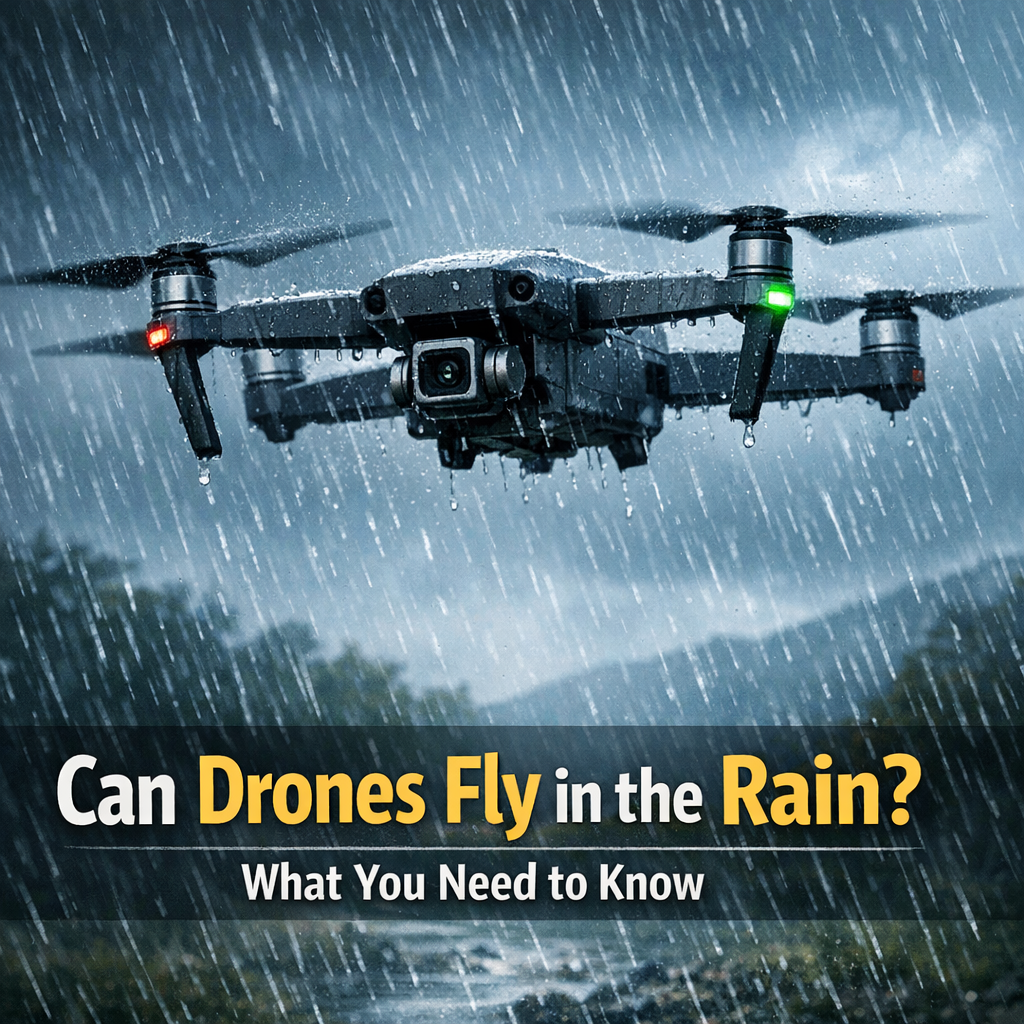
A drone is a compact flying machine packed with delicate parts. Inside the frame are circuit boards, batteries, sensors, motors, and wiring that all need to stay dry. Rain introduces multiple hazards at once: moisture, reduced visibility, changes in air density, and the possibility of wind gusts that often accompany stormy weather. Even light drizzle can be enough to create problems if the drone lacks protection.
Water and electronics do not mix
The biggest concern is electrical damage. Water can seep into openings around the battery compartment, camera gimbal, vents, and motor housing. Once moisture reaches the electronics, it can cause short circuits or corrosion. Sometimes the damage is immediate, but in many cases it appears later, after the components have already begun to degrade. That is one reason why can drones fly in the rain is not just a weather question, but a maintenance question too.
Rain can interfere with flight stability
Droplets on propellers and sensors may not seem like a major issue, but they can affect lift, balance, and navigation. Optical sensors, obstacle detection systems, and downward vision modules may read inaccurately when surfaces are wet. In heavier rain, turbulence can also make it harder for the drone to hold position or return safely. Even when a pilot is experienced, wet-weather handling can feel less predictable than a normal flight.
In practice, can drones fly in the rain depends on how much water the aircraft can tolerate, how long it stays exposed, and whether the flight must be completed at all. For most hobby flights, the risk is not worth it.
Are any drones safe to fly in the rain?
Some drones are marketed as water-resistant, but that does not always mean they are safe for prolonged exposure. The level of protection varies significantly from model to model. A drone with an IP rating, for example, may tolerate splashes or brief exposure to light rain, but that does not guarantee full waterproof performance.
What waterproof and water-resistant really mean
Water-resistant typically means the drone can handle limited moisture for a short period. Waterproof means the design is intended to keep water out under defined conditions. However, even waterproof equipment has limits. Manufacturers may specify the depth, duration, or type of exposure the drone can handle. It is important to read those specifications carefully rather than assuming the device can survive a storm.
If the product documentation does not clearly say can drones fly in the rain under the conditions you expect, the safest answer is no. Always treat a vague claim like “splash resistant” as a warning to keep the aircraft out of sustained rainfall.
Industrial and specialty drones
Professional drones used for search and rescue, agricultural spraying, or inspection work may be engineered for harsher environments. These systems often have sealed components, covered ports, and weatherproof shells. Still, operators usually follow strict safety rules and avoid flying during severe rain, thunderstorms, or high winds. The aircraft may be more capable than consumer models, but nature still sets the boundaries. If you want a broader overview of rugged use cases, see Agricultural Drones: 7 Powerful Uses and Benefits.
That is also why can drones fly in the rain is best answered by looking at the exact model, the mission, and the manufacturer’s operating limits instead of using a one-size-fits-all rule.
Risks of flying a drone in wet weather
Flying in the rain is more than just an inconvenience. It can lead to expensive repairs, data loss, and unsafe flight behavior. Understanding the risks makes it easier to decide when to keep the drone grounded.
Motor strain and reduced performance
Wet conditions can make motors work harder. Water entering the motor housing may create resistance, reduce efficiency, or cause erratic spinning. Propellers can also become less effective when wet, especially if water droplets accumulate unevenly. That uneven load can make the drone less responsive and more difficult to control.
When pilots ask can drones fly in the rain, they often focus on the electronics first. Motors matter just as much, because a weak or overloaded motor can trigger a forced landing long before the battery is empty.
Loss of visibility and camera quality
Rain can make aerial footage unusable. Droplets on the lens distort images, and humidity can create fogging inside or outside the camera housing. For pilots using live video feeds, reduced visibility can make navigation more difficult and increase the chance of collisions or hard landings.
Increased crash risk
Rain often comes with wind, and wind is one of the main reasons drones become unstable. Even if the drone remains technically operational, sudden gusts can push it off course. Wet surfaces can also make landing more dangerous, especially if the landing area becomes slippery, muddy, or uneven.
Battery concerns
Cold rain and wet conditions can affect battery efficiency. Lithium-polymer batteries already lose some performance in cold weather, and moisture can compound the problem by increasing the chance of poor connections or unsafe operation. A weakened battery means less flight time and a higher risk of forced landing before the drone reaches home.
For context on normal battery limits, check this guide on Drone Flight Time: How Long Can a Drone Typically Fly?.
Once you factor in shorter battery life, lower visibility, and unstable wind, can drones fly in the rain starts to look like the wrong question for most casual flights. A better question is whether the flight is important enough to justify the risk.
Corrosion and long-term wear
Even if a drone seems fine after a light shower, water can leave behind mineral residue and start corrosion over time. Connectors, screws, circuit boards, and motor bearings may all degrade more quickly after exposure. That means can drones fly in the rain is not only about staying airborne today; it is also about protecting the drone’s long-term lifespan.
How to tell if it is safe to fly
Before launching a drone in questionable weather, check the manufacturer’s guidelines. If the manual does not specifically approve rain use, assume the drone is not suitable for it. Weather apps and local forecasts are also essential tools. A brief light shower may seem harmless, but rain intensity can change quickly.
Look beyond the rain itself
Rain is only part of the picture. Consider wind speed, cloud cover, temperature, and the possibility of lightning. Thunderstorms are especially dangerous because they introduce electrical risk and rapidly changing air movement. If lightning is even a possibility, the drone should remain on the ground.
When people ask can drones fly in the rain, they often overlook the storm system around the rain. The answer depends just as much on the surrounding weather as it does on the water falling from the sky.
Inspect the launch and landing area
A wet flight path is not the only issue. The ground itself matters. Grass, concrete, sand, and rooftops all behave differently when wet. Make sure the takeoff and landing zone is clean, stable, and free of standing water. Water on the ground can splash upward during takeoff and expose the drone to even more moisture.
For official weather alerts and storm guidance, the National Weather Service is a useful reference: National Weather Service weather safety information.
Use the manufacturer’s weather guidance
If the aircraft manual includes a temperature range, wind limit, or moisture warning, follow it closely. These specifications exist for a reason. Even if a friend says a model handles drizzle just fine, that advice does not replace the official operating guide. If the manual is unclear, treat the drone as unsuitable for rain exposure.
What weatherproof ratings actually tell you
Some pilots see an IP rating and assume the issue is solved. In reality, ratings only describe a controlled level of protection. They do not automatically mean a drone can take off, hover, and land in a storm without problems.
IP ratings in simple terms
An IP rating usually measures how well an enclosure keeps out solid particles and water. The numbers can be useful, but they are not a promise of unlimited weather resistance. One model may handle splashes from any direction, while another may only tolerate very limited exposure. Always read the exact meaning of the rating instead of relying on the number alone.
Why ratings still do not guarantee safe flight
Waterproof housings can protect sensitive parts, but propellers, gimbals, vents, and exposed connectors may still be vulnerable. Flight in rain also introduces operational hazards that ratings do not solve, such as reduced visibility and stronger winds. So even if the answer to can drones fly in the rain seems to be yes for a specialty model, the practical answer may still be “not unless the mission truly requires it.”
What to do if your drone gets wet
If a drone is caught in the rain, quick action can reduce damage.
Power it down immediately
Turn the drone off as soon as it is safe to do so. Disconnect and remove the battery if possible. Keeping power flowing through a wet system can worsen electrical damage.
Dry it carefully
Use a soft, dry cloth to remove visible moisture from the exterior. Pay close attention to seams, vents, ports, and the battery area. Avoid using heat guns, hair dryers, or direct high heat, which can warp plastic parts or push moisture deeper into the device.
Let it sit before testing
After drying the exterior, allow the drone to air out in a dry environment. Some pilots place it near desiccant packets or in a sealed container with moisture-absorbing material. Do not rush to power it back on. Internal moisture may still be present even when the outside appears dry.
Check for signs of damage
Once the drone has fully dried, inspect it for corrosion, unusual noise, calibration issues, or battery problems. If it behaves strangely, professional servicing may be the safest option. Trying to fly a compromised drone can lead to a crash.
If you are still asking can drones fly in the rain after a wet landing incident, the safer move is to wait until a full inspection is complete. Repeated power cycles on a damp aircraft can turn a repairable issue into a permanent failure.
Common mistakes pilots make in wet weather
Many rain-related drone failures are preventable. A few habits increase the chance of damage or loss.
- Assuming light rain is harmless when the drone is not rated for moisture exposure.
- Launching without checking wind, visibility, or lightning risk.
- Ignoring condensation after moving from a cold vehicle into humid air.
- Taking off from wet grass or muddy ground that can splash the aircraft.
- Powering the drone back on too soon after rain exposure.
These mistakes matter because can drones fly in the rain is often answered too casually. A small amount of water, combined with impatience, can cause a very expensive problem.
Best practices for drone pilots
The safest strategy is usually prevention. Treat rain as a serious environmental hazard rather than a minor inconvenience. Keep an eye on weather conditions before each flight and build flexibility into your plans so you can postpone takeoff when necessary.
Use protective accessories where appropriate
Some pilots use rain covers, landing pads, or sealed cases to reduce exposure risk. These accessories can help in light moisture or during transport, but they are not a guarantee of safety in active rain. Accessories should be viewed as additional protection, not permission to ignore weather limits.
Train for decision-making, not just flight control
Good drone operation is not only about flying skill. It is also about judgment. Knowing when not to fly is a major part of being a responsible pilot. If conditions look uncertain, the smarter choice is often to wait. A delayed flight is far better than a damaged drone or lost footage.
Know when to upgrade your equipment
If you regularly need to work in damp environments, consider whether a more durable model is appropriate. A weather-resistant platform may be a better fit for certain jobs, but it still needs careful handling and realistic expectations. Even a tougher aircraft benefits from conservative decision-making in bad weather.
Some buyers also wonder whether a drone is worth the cost if they only fly occasionally. That decision is easier with a clear understanding of use cases and tradeoffs in Drone Worth Buying? Honest Pros and Cons.
Plan for a safer return
If there is any chance the weather will worsen, start with a shorter route, a higher battery reserve, and a closer return path. That gives you more margin if rain begins earlier than expected. Responsible pilots think about the landing, not just the launch.
When to stop the flight immediately
Even a drone that was performing well a few minutes ago may need to come home right away. Stop the flight if rain becomes steady, if visibility drops, if wind picks up, or if the control link starts to feel unreliable. If the camera feed becomes unreadable, continue only if you can bring the drone back safely with confidence.
In other words, can drones fly in the rain is not a decision to make once before takeoff and forget about. Weather can shift during the flight, and the pilot needs to react quickly if conditions stop being acceptable.
Final thoughts on can drones fly in the rain
So, can drones fly in the rain? In most cases, the answer is no, at least not safely for standard consumer models. Some weather-resistant and industrial drones can handle light rain or harsh environments better than average, but every aircraft has limits. Rain threatens electronics, reduces visibility, strains motors, and increases the chance of a crash. For most pilots, the safest approach is to keep the drone dry, monitor the weather carefully, and fly only when conditions are suitable.
In short, can drones fly in the rain depends on the model, the weather, and the pilot’s judgment. When in doubt, assume the safer choice is to wait for clear skies.
For most owners, the best rule is simple: if you are asking can drones fly in the rain, you probably already have enough doubt to postpone the flight. Protect the aircraft, protect the battery, and protect the footage by waiting for better conditions.







Add comment