
Shipping drone products is rarely just a product and a carton. For many buyers, the real work begins with compliance paperwork, especially when lithium batteries are involved. That is why drone battery shipping documents matter so much. Whether you are an importer, distributor, Amazon seller, or brand owner, you need to confirm the right paperwork before goods leave the factory. Missing or incorrect documents can delay freight booking, trigger customs issues, or make a shipment unacceptable to the carrier.
For battery-powered drone products, documentation requirements can vary by model, battery type, shipment size, destination country, and transport method. A seller moving a small parcel by air does not face the same requirements as a wholesaler arranging palletized cargo. Buyers should treat document review as part of procurement, not as a last-minute shipping task.
Why battery shipping paperwork matters
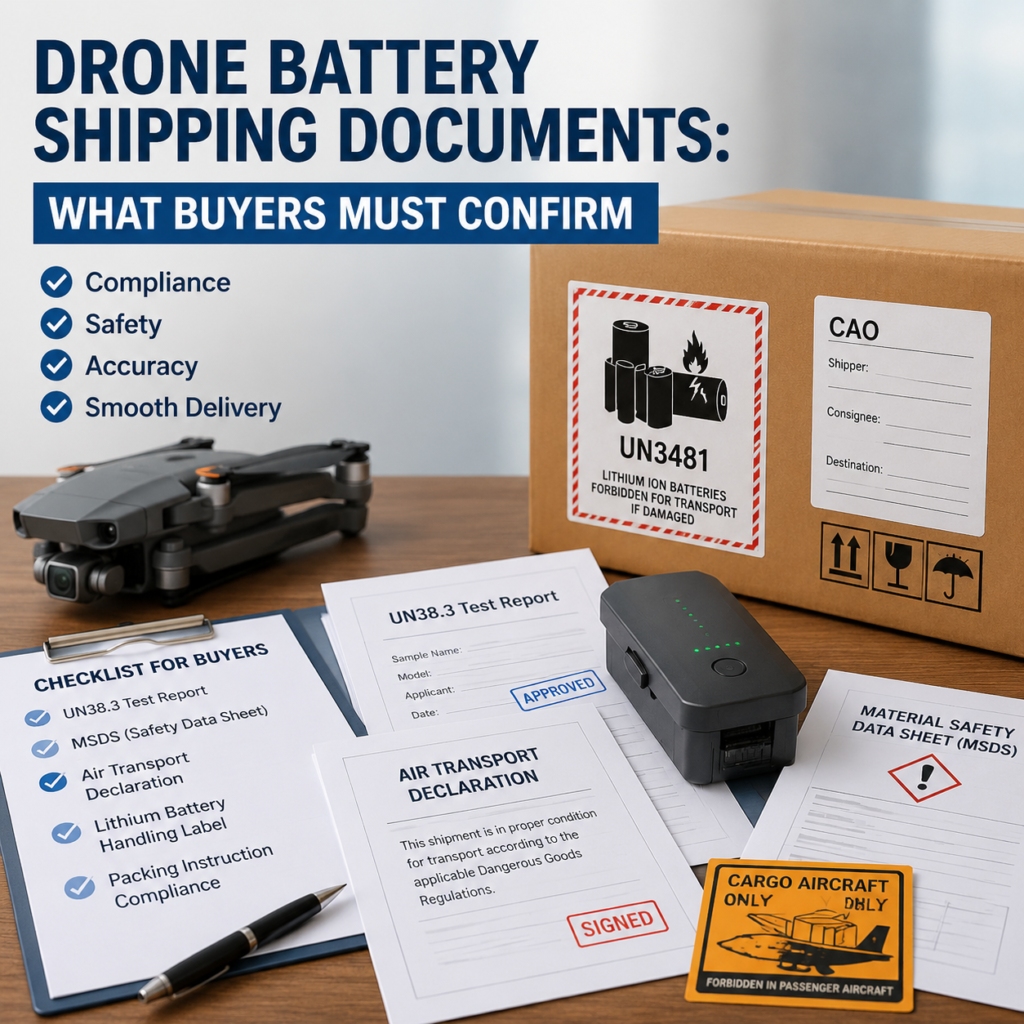
Drone batteries are regulated because lithium cells can present safety risks during transport. Freight forwarders, airlines, customs authorities, and destination-market regulators may ask for specific evidence that the battery pack has been tested, classified, packaged, and declared correctly.
The practical impact is straightforward: if the paperwork is incomplete, the shipment may be held, reclassified, rejected, or rerouted. That can raise costs and push back delivery schedules. For buyers who depend on stable stock levels, even a short delay can affect sales, retail launch dates, or distributor commitments.
This is especially important for e-commerce sellers and importers who operate on tight inventory cycles. A shipment that leaves late because one document was missing can create downstream issues in warehousing, listings, and order fulfillment. In many cases, the carrier will ask for the same drone battery shipping documents again before booking space, so it pays to get the file set right the first time.
If you work with larger wholesale orders, it also helps to compare battery requirements with broader sourcing and import planning. A useful reference is Wholesale Drones, which covers product selection and buying considerations that often affect shipping preparation too.
Key drone battery shipping documents to confirm
Not every shipment needs the same file set, but buyers should know the most common document categories and ask suppliers which ones are available for the exact product being ordered. The right drone battery shipping documents should match the battery model, the route, and the carrier’s handling rules.
UN38.3 test report
The UN38.3 test report is one of the most important documents for lithium batteries. It confirms that the battery has passed transport safety tests related to altitude, thermal conditions, vibration, shock, external short circuit, impact, overcharge, and forced discharge.
Buyers should confirm:
- The report matches the exact battery model
- The report is current and valid for the supplied unit
- The battery configuration in the report matches the shipment
- The supplier can provide a clear copy for the freight forwarder
For drone batteries, this document is often requested before air freight can be booked. Even when the report exists, the details still need to match the actual product. This is one of the core drone battery shipping documents that freight partners will review first.
MSDS or SDS
An MSDS, also called an SDS in some markets, describes the chemical composition, handling guidance, and hazard information for the battery. This document helps shippers and carriers understand how to handle the goods safely.
Buyers should check whether:
- The battery chemistry is listed correctly
- The document matches the exact product version
- The supplier can provide the latest version in the required language or format
Some forwarders accept an older style MSDS, while others prefer an SDS. The important point is to confirm the format your shipping partner expects before cargo is ready. In practice, the MSDS or SDS is usually reviewed alongside the other drone battery shipping documents before pickup.
Product specification sheet
A specification sheet helps verify battery voltage, capacity, dimensions, weight, cell type, and pack structure. It is not always a formal transport document, but it often supports the shipping review process.
This is useful when a freight forwarder needs to classify the shipment or check whether the battery falls under passenger aircraft restrictions, cargo aircraft rules, or other handling limitations. A clear specification sheet also helps align the drone battery shipping documents with the product that actually left the factory.
Packing list and carton details
The packing list and carton information should show how the batteries are packed, how many units are in each carton, gross and net weight, carton dimensions, and marks or labels used on the outer packaging.
Buyers should confirm:
- Unit quantity per carton
- Carton weight and dimensions
- Battery placement inside the package
- Any special labels or marks on the outer box
- Whether the packaging matches the approved shipping method
For bulk orders, this information is critical because it affects freight quotation, warehouse receiving, and customs entry. It also needs to match the rest of the drone battery shipping documents so the shipment does not look inconsistent during review.
Commercial invoice and export documents
Although not battery-specific, the commercial invoice and export supporting documents are part of the full shipping file. They should describe the goods accurately and consistently across all paperwork.
Buyers should check that product names, model numbers, quantities, unit values, and shipping terms match the other documents. If the invoice describes the battery one way and the test report describes it differently, the shipment can raise questions during clearance. That is why buyers should treat the invoice as part of the broader set of drone battery shipping documents, not as a separate formality.
For official guidance on lithium battery transport classifications, carriers and forwarders often refer to the International Air Transport Association. Their Dangerous Goods pages are a useful starting point: IATA Dangerous Goods Regulations overview.
What buyers should verify before placing an order
The safest approach is to confirm documentation requirements before production begins. That avoids surprises after goods are packed and waiting to ship. It also gives the buyer time to check that the drone battery shipping documents are complete before the freight booking deadline.
Match the documents to the exact product
A common mistake is assuming one battery document can cover all related drone models. That is not always true. Buyers should verify that the paperwork matches the exact battery model, capacity, and configuration in the purchase order.
Even small differences can matter. A battery upgrade, a revised cell arrangement, or a new housing can change which documents apply. If the item changes after the test report was issued, the drone battery shipping documents may need to be refreshed before shipment.
Confirm the destination market rules
Requirements vary by country and by shipping lane. A product acceptable in one destination may need extra declarations, labels, or supporting documents in another.
Importers should confirm whether the destination market requires:
- Additional compliance files
- Local language labels
- Special declarations for lithium batteries
- Product registration or customs attachments
This is particularly important for battery-powered drone products shipped into markets with stricter import controls. In those cases, the drone battery shipping documents may need to be tailored to the destination rather than reused from a previous order.
Check the shipping method
Air freight, sea freight, courier service, and postal channels may each have different document expectations. Some carriers are stricter than others, and some accept only specific document formats.
Buyers should ask:
- Is the shipment going by air or sea?
- Is the carrier a passenger airline, cargo airline, or express courier?
- Does the forwarder need printed originals or digital copies?
- Are any additional packing or labeling rules required?
If the shipping method is not finalized early, the document set may need to be adjusted later. That is one of the main reasons drone battery shipping documents should be reviewed before production is complete.
Verify carton labeling and packaging compliance
Battery shipping is not only about documents. Packaging and marking are part of the approval process as well. The carton should reflect the battery’s transport status and any required hazard or handling markings.
Buyers should confirm:
- Whether packaging meets carrier requirements
- Whether labels are placed correctly
- Whether cartons need outer marks for lithium batteries
- Whether the packaging size and weight align with the declared shipment
Poor packaging can create the same problems as missing paperwork. When packaging, labeling, and drone battery shipping documents do not match, carriers often slow the shipment down for re-checking.
Questions buyers should ask suppliers
A practical supplier review starts with direct questions. Buyers should ask the supplier or factory to confirm:
- Which battery shipping documents are available for this exact model?
- Do the UN38.3 and MSDS documents match the current production batch?
- Can the supplier provide specification sheets, carton details, and export documents?
- Are there any destination-specific compliance requirements for this shipment?
- Does the battery require special labels, declarations, or packaging instructions?
- Are the documents suitable for the intended freight method?
These questions help avoid assumptions. A supplier may have documents available for one battery line but not another, and document availability can also depend on production batch, order quantity, and supplier source. Asking early keeps the drone battery shipping documents aligned with the actual order rather than with a generic product listing.
Documentation support from DroneSo
DroneSo can assist with documentation and certification document coordination for selected products and orders. Depending on the model and the source, available materials may include product specifications, product datasheets, packaging information, carton details, estimated shipping weight, product test reports, quality inspection reports, and export-related supporting documents.
For battery-powered drone products, DroneSo can help coordinate available compliance files such as CE documentation, FCC documentation, RoHS documentation, UN38.3 battery test reports, MSDS battery safety documents, and shipping-related compliance documents when applicable. These documents are not guaranteed for every product by default, so buyers should confirm what is available for the specific model, batch, and destination market before placing an order. In practice, this support is most useful when the buyer needs multiple drone battery shipping documents checked together instead of one file at a time.
If your sourcing process includes custom builds or private labeling, the paperwork review becomes even more important. Related planning guidance is covered in OEM Drone Manufacturing: MOQ, Packaging & Lead Times, which is helpful when production and export details need to be coordinated from the start.
Final checks before shipment
Before approving a battery shipment, buyers should make sure all details line up across the purchase order, specification sheet, invoice, packing list, and transport documents. The same product name, model number, battery type, quantity, and packaging description should appear consistently across the file set.
That simple discipline reduces friction with freight forwarders, customs, and carriers. It also gives importers, distributors, and e-commerce sellers a clearer path from factory to warehouse. Most shipment delays are not caused by one dramatic error; they are caused by small mismatches across the drone battery shipping documents that should have matched from the start.
Before release, the buyer should do one last check for model accuracy, destination requirements, packaging compliance, and transport method. If any part of the file set looks off, the correction should happen before the shipment leaves the factory.
For drone battery logistics, good paperwork is not paperwork for its own sake. It is what keeps the shipment moving, and the right drone battery shipping documents are often the difference between a clean dispatch and a costly delay.





Add comment