
OEM Drone Manufacturing is often more complex than buyers expect at first glance. For distributors, importers, e-commerce sellers, and drone brands, the main decisions are usually not about the product concept alone, but about practical project details such as minimum order quantity, packaging requirements, and production lead time. These factors directly affect pricing, launch planning, shipping, and how quickly a product can reach the market. Understanding them early helps avoid delays and makes it easier to evaluate whether a project is commercially workable.
Table of Contents
What OEM Drone Manufacturing Really Involves
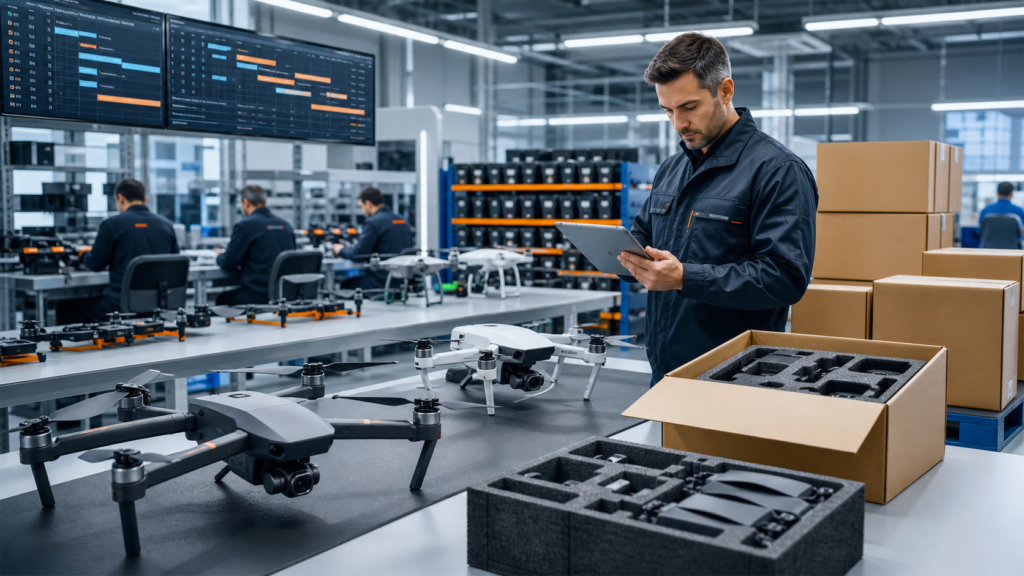
OEM Drone Manufacturing refers to producing drones under a buyer’s brand or specification, often with custom packaging, logo placement, labels, and documentation support. In many cases, the core product already exists, but the buyer requests branding and presentation changes to match a target market. For business buyers, this approach is attractive because it can reduce development time while still creating a differentiated product line.
The exact scope of an OEM project depends on the drone model, order size, and supplier capabilities. Some projects only require logo printing and retail box customization. Others may include user manual changes, accessory bundle adjustments, or product label updates. More advanced orders can involve additional coordination around compliance documents, battery shipping materials, and destination market requirements.
For buyers, the real value of OEM drone manufacturing is flexibility. A distributor may want a stable model with consistent supply. An Amazon seller may need retail-ready packaging and product images. A drone brand may want a fully branded presentation package that looks and feels unique in the market. If you need a broader sourcing plan, Custom Drone Projects can be a useful starting point for comparing project scope.
MOQ: Why Minimum Order Quantity Matters
Minimum order quantity, or MOQ, is one of the first topics buyers should clarify. It is the lowest quantity a manufacturer or supplier is willing to produce for a specific OEM setup. MOQ exists because customization adds setup work, material planning, and production coordination. The supplier needs enough volume to make the project efficient.
When buyers discuss OEM drone manufacturing early in the sourcing process, MOQ usually becomes the first commercial filter. It determines whether the project can move forward at all, and if so, how much flexibility the supplier can offer around packaging, labeling, and bundle configuration.
How MOQ affects price and feasibility
MOQ has a direct impact on unit cost. Lower quantities usually mean higher per-unit pricing because fixed production and packaging costs are spread over fewer units. Higher quantities often improve pricing, but they also increase inventory risk. A buyer who orders too many units before validating demand can end up with slow-moving stock.
MOQ also influences whether a project is even worth moving forward. If the required customization is minimal, the MOQ may be relatively low. If the buyer wants custom packaging, special inserts, branded manuals, or bundle configuration, the MOQ may rise. This is especially relevant for private label projects, where all branded materials must be prepared in advance.
For example, a distributor comparing wholesale supply with branded production may find that a standard model is easy to source, while an OEM version requires more planning and a larger commitment. That is why MOQ is not just a pricing detail; it is a feasibility checkpoint.
What buyers should prepare before asking for MOQ
To get a realistic MOQ estimate, buyers should prepare the target product category, estimated quantity, destination country, sales channel, logo files, packaging requirements, user manual needs, certification requirements, and accessory bundle preferences. This gives the supplier enough information to assess feasibility and quote accurately.
A distributor looking for bulk supply and stable restocking will often approach MOQ differently from an Amazon seller testing a new listing. The first may prioritize large-volume efficiency, while the second may want the smallest practical launch quantity. If you are comparing sourcing paths, Wholesale Drones is a practical reference point for volume-focused planning.
Packaging: More Than a Box
Packaging is not just a visual layer. It affects compliance, shipping cost, product protection, customer perception, and brand positioning. In OEM drone manufacturing, packaging decisions can shape the entire commercial outcome of the product.
Packaging also affects how a product is received before the buyer ever touches the drone itself. Clear labeling, neat presentation, and the right box structure can make a product easier to warehouse, easier to list, and easier to sell.
Retail packaging and private label presentation
For e-commerce sellers and Amazon sellers, retail packaging is often essential. Buyers expect packaging that is clean, informative, and ready for shelf or marketplace presentation. This may include a branded outer box, printed product specifications, barcode labels, inserts, and protective inner trays.
Private label packaging goes a step further. It can include custom artwork, branded color schemes, logo placement, and product labels. The goal is to make the product look like a distinct brand item rather than a generic factory unit. Many buyers pair packaging decisions with Private Label Drones so the presentation matches the brand strategy from the start.
Packaging details that affect shipping and compliance
Packaging dimensions matter because they affect shipping cost, carton loading, and warehouse handling. A compact design can reduce freight expenses, while bulky packaging can make a product less competitive in cross-border commerce. Packaging also needs to protect the drone, remote controller, batteries, propellers, and accessories during transport.
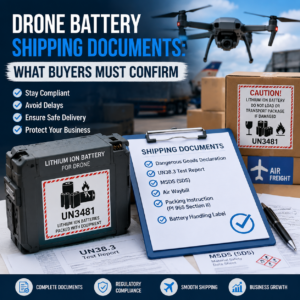
For importers, packaging is often tied to documentation and customs planning. Certain markets may require battery-related labeling, destination-specific warnings, or language adjustments in the manual and carton copy. If the packaging is not aligned with the destination country’s requirements, clearance can be delayed. According to the International Air Transport Association, lithium battery shipments also need careful handling and proper documentation, which is why packaging planning should happen early. See the current guidance at IATA lithium battery shipping guidance.
Common packaging options in OEM projects
OEM Drone Manufacturing projects may include plain export cartons, retail boxes, color printed boxes, gift-style packaging, or bundled accessory packaging. Some buyers need a simple logo print and barcode label. Others need full retail presentation with custom inserts and translated user materials. The best choice depends on the channel, target price point, and order quantity.
In practice, the packaging decision should match the sales channel. A distributor may prioritize durable cartons and efficient palletization, while a brand selling direct to consumers may care more about shelf appeal and unboxing experience.
Lead Time: Planning the Production Timeline
Lead time is the period from order confirmation to shipment readiness. It is one of the most important planning factors in OEM drone manufacturing because it affects product launch timing, seasonal sales planning, and warehouse coordination.
Buyers often underestimate how much lead time interacts with every other part of the project. If packaging artwork changes late, or if approval takes longer than expected, the shipment window can move even when production itself stays on schedule.
Standard versus customized lead time
For standard products, lead time is often around 15–30 days. For customized products, it may extend to 30–60 days or more, depending on complexity. A project with basic logo printing and standard packaging may move faster than one requiring custom artwork, accessory bundles, and revised manuals.
Lead time depends on several variables:
- Product category and model availability
- Order quantity
- Customization scope
- Material availability
- Supplier source
- Production schedule
- Packaging and documentation requirements
A buyer planning a holiday sales push cannot treat lead time as a rough estimate. It needs to be built into the launch calendar with enough margin for sampling, approval, and possible revisions. That is especially true when OEM drone manufacturing is supporting a launch that depends on retail packaging, compliance checks, and coordinated freight bookings.
Why approval steps can extend the schedule
OEM projects often involve confirmation of artwork, packaging layout, logo placement, accessory content, and documentation wording before production begins. Each review round can add time. If the buyer delays sample approval or changes branding details late in the process, the timeline moves back.
This is why it is useful to finalize key details before deposit payment and production start. In many OEM and private label orders, production begins after deposit payment, and the remaining balance must be paid in full before shipment. Buyers who prepare information early tend to move through the process faster.
For buyers who want a broader understanding of supplier planning, OEM Manufacturing explains how production coordination affects cost, timing, and execution across different product types.
How Different Buyer Groups Approach OEM Drone Manufacturing
Different buyers care about different aspects of the process, even when they are sourcing the same product category.
Distributors and wholesalers
Distributors and wholesalers usually focus on product availability, MOQ, bulk pricing, stable supply, documentation, packaging information, shipping terms, and long-term cooperation. They want a dependable supply chain and predictable replenishment.
E-commerce sellers and Amazon sellers
These buyers usually focus on product selection, retail packaging, private label options, product images, product information, sample orders, packaging dimensions, shipping cost, and after-sales support. Presentation and listing readiness are often just as important as the drone itself.
Drone brands
Drone brands usually care about OEM support, private label services, logo placement, custom packaging, product labels, user manual options, compliance documents, quality checking, and lead time. Their goal is to present a polished brand identity and maintain consistency across the product line.
Importers
Importers tend to focus on certification documents, battery shipping documents, export documents, packaging details, shipping terms, customs requirements, and destination market requirements. Their priority is smooth border clearance and compliant delivery.
When the buyer base includes both distributors and brands, the supplier often has to balance price, packaging detail, and lead time. That balance is central to successful OEM drone manufacturing because the wrong tradeoff can make a product attractive in the sample stage but difficult to scale later.
Practical Steps Before Starting a Project
Before requesting a quotation, buyers should organize the basic project details. That includes the product category, target quantity, destination country, sales channel, branding files, packaging needs, user manual requirements, certification requirements, and any accessory bundle preferences. This information helps the supplier judge whether the project is realistic and what type of support is needed.
It also reduces back-and-forth during quotation and sample preparation. The clearer the initial brief, the easier it is to estimate MOQ, packaging cost, and lead time with accuracy. For business buyers, that clarity can save both time and money. If you need help preparing supplier questions, the FAQ page is a useful place to review common order and sourcing questions.
In many cases, the most efficient workflow is straightforward: define the market, confirm the required packaging, request MOQ and lead time, review samples, and finalize the order only after the details match the sales plan. That sequence keeps the project aligned with the commercial goal rather than forcing the product into an incomplete launch plan.
Buyers who are still comparing sourcing channels may also want to review Distributors & Wholesalers to understand how larger order patterns and channel expectations affect project planning.
Conclusion
OEM Drone Manufacturing is most successful when MOQ, packaging, and lead time are treated as core project variables rather than afterthoughts. MOQ determines whether the order makes sense financially. Packaging influences branding, shipping, and compliance. Lead time shapes launch timing and inventory planning. Buyers who understand how these three elements work together can make better sourcing decisions, reduce project risk, and bring products to market with fewer surprises.
For teams evaluating a new product line, the most practical next step is to define the order quantity, confirm packaging requirements, and map the production timeline before moving ahead. That keeps OEM drone manufacturing grounded in commercial reality and makes the final launch far easier to manage.

Add comment