
The global drone wholesale market is entering a pivotal phase in 2026, driven by rising commercial adoption, improving hardware capabilities, and expanding cross-border trade. What was once a niche category dominated by hobbyist models has become a fast-scaling international business tied to agriculture, logistics, infrastructure inspection, public safety, media production, and consumer recreation. With 4.94 million exports signaling the scale of worldwide movement, the opportunity behind drone distribution is no longer speculative—it is a serious billion-dollar market shaped by supply chains, regulation, and demand from both emerging and mature economies.
A Market Defined by Scale and Speed
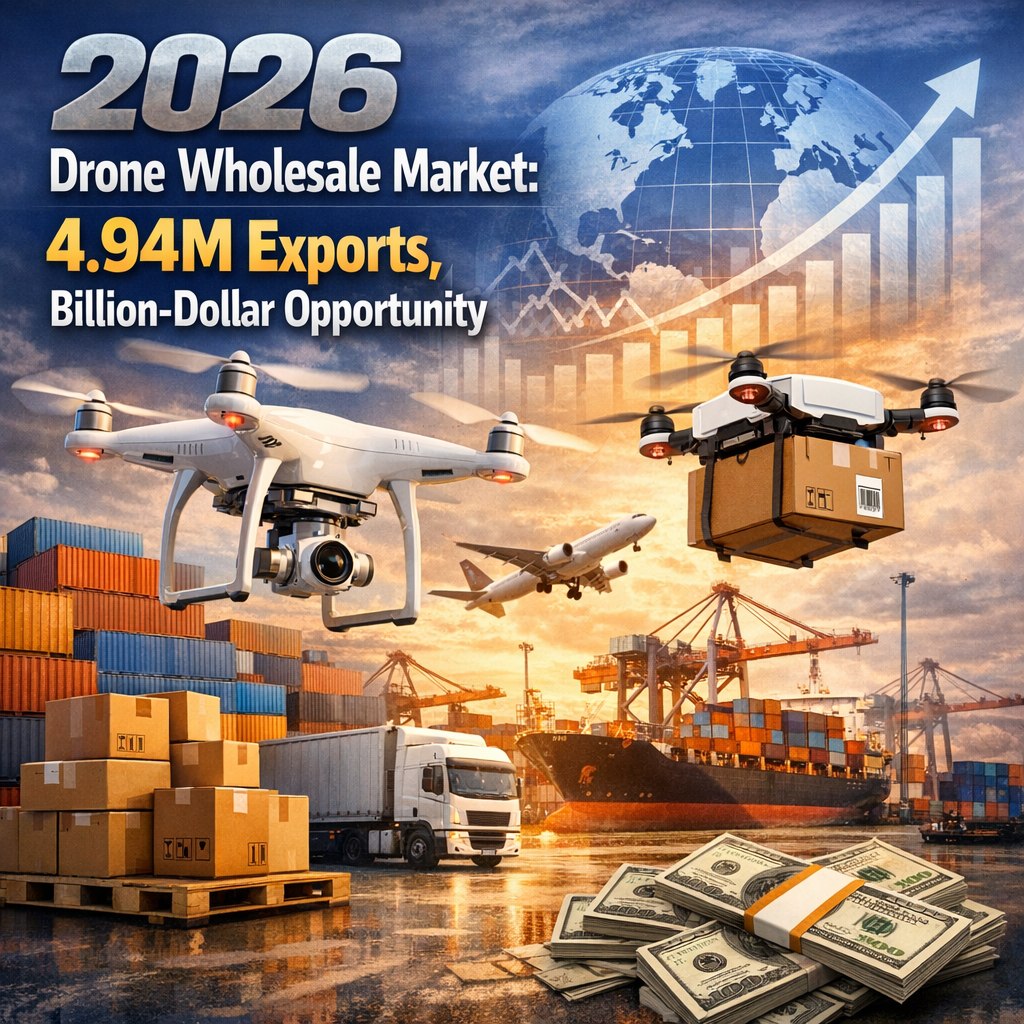
The most striking feature of the 2026 drone wholesale landscape is its pace of expansion. Demand is rising across nearly every major region, but the real story is not just more units sold. It is the shifting mix of products, buyers, and use cases. Wholesalers are no longer focused only on basic consumer drones. They are increasingly supplying enterprise-grade systems with specialized sensors, autonomous navigation, thermal imaging, mapping capabilities, and longer flight times.
The figure of 4.94 million exports reflects more than shipment volume. It points to a global ecosystem where manufacturers, importers, distributors, and retailers are operating in a highly competitive environment. Countries with advanced manufacturing capabilities continue to lead production, while import-heavy markets are driving wholesale demand through rapid commercialization and infrastructure investment.
Why 2026 Is a Defining Year for Drone Distribution
Several forces are converging to make 2026 a defining year for the wholesale drone industry. First, technology has matured enough to support broader business use. Better batteries, lighter materials, improved obstacle avoidance, and smarter software have made drones more reliable and easier to deploy at scale.
Second, regulatory frameworks in many countries are becoming clearer. While compliance remains complex, the uncertainty that once slowed adoption is gradually giving way to structured pathways for commercial use. This is especially important for wholesale buyers, who need stable product categories and predictable import rules.
Third, end-user demand is diversifying. Agricultural buyers want precision spraying and crop monitoring. Construction firms need site surveying and progress documentation. Security teams seek aerial surveillance. Delivery pilots are testing logistics models in limited corridors. Each of these applications creates repeat demand for suppliers who can deliver consistent quality, accessories, training materials, and after-sales support.
The Economics Behind the Billion-Dollar Opportunity
At the wholesale level, drones are attractive because they sit at the intersection of high margins and recurring demand. A distributor can generate revenue not only from the aircraft itself, but also from batteries, controllers, payloads, maintenance kits, software subscriptions, replacement parts, and service contracts.
High-Value Segments Are Expanding
Enterprise drones typically command much higher prices than consumer models, and their buyers often purchase in batches for fleet deployment. That matters because it changes the economics of the wholesale business. Instead of relying on one-off retail sales, distributors can build longer-term commercial accounts. These buyers often require:
- Bulk procurement
- Custom configurations
- Technical onboarding
- Warranty support
- Spare component inventories
That recurring ecosystem helps stabilize revenue even when consumer demand fluctuates seasonally.
Margins Depend on Specialization
The most successful wholesalers in 2026 are not necessarily those with the lowest prices. They are the ones who understand segmentation. A basic quadcopter for beginners competes on price, but an industrial drone for surveying or inspection competes on capability, reliability, and service. That allows wholesalers to differentiate through expertise rather than discounting alone.
Supply Chain Dynamics Shaping the Market
Global drone exports are influenced by the same forces affecting many advanced electronics categories: component sourcing, manufacturing concentration, freight costs, and trade policy. As 4.94 million exports move through global channels, supply chain resilience becomes a core advantage.
Manufacturing Hubs Remain Central
Production is still concentrated in a few key regions with strong electronics ecosystems, skilled labor, and established assembly networks. These hubs benefit from scale, but they also face pressure from diversification strategies as importers seek to reduce dependence on single-source suppliers.
Logistics and Lead Times Matter More Than Ever
For wholesalers, lead time can be as important as unit cost. Commercial customers often plan deployments around agricultural cycles, inspection schedules, or project deadlines. Delays in shipping or customs clearance can disrupt operations and damage trust. As a result, distributors with reliable inventory planning, regional warehousing, and flexible fulfillment options are gaining an edge.
Quality Control Is a Competitive Weapon
In a category where product failure can lead to safety concerns or business interruption, quality assurance is not optional. Wholesale buyers increasingly evaluate suppliers on consistency, certification, testing protocols, and post-sale responsiveness. The companies that invest in quality control are better positioned to capture institutional clients and repeat contracts.
Key Demand Drivers Across Industries
The wholesale drone market is being powered by practical applications rather than novelty. Different sectors are buying for different reasons, but all are contributing to the same broader expansion.
Agriculture
Agriculture remains one of the strongest growth areas for commercial drones. Farmers and agribusinesses use aerial systems for crop monitoring, field mapping, spraying, and yield optimization. These applications drive demand for robust, weather-resistant platforms with payload capacity and precision controls.
Construction and Infrastructure
Construction companies use drones to capture site data, monitor progress, and improve project oversight. Infrastructure operators deploy drones for bridge, tower, roof, and utility inspection. In both cases, buyers want dependable hardware and clear reporting integration.
Public Safety and Security
Law enforcement, emergency services, and private security organizations are adopting drones for situational awareness, search-and-rescue support, perimeter monitoring, and disaster response. This segment often requires thermal imaging, night operation capability, and secure communications.
Media and Content Production
Film crews, agencies, and independent creators continue to generate steady demand for aerial imaging drones. While this segment is more mature, product refresh cycles and accessory purchases still create wholesale opportunities.
What Buyers Look for in 2026
Wholesale customers are becoming more sophisticated. They are not simply comparing resolution or flight time; they are evaluating the full ownership experience.
Reliability and Serviceability
A drone that is easy to repair and maintain is more valuable than one with flashy specs but weak support. Buyers increasingly prefer suppliers that can provide spare parts, service manuals, and technical guidance.
Software and Data Integration
Commercial customers want drones that fit into existing workflows. That means compatibility with mapping platforms, asset management software, and analytics tools. The more seamless the integration, the more attractive the product.
Compliance and Documentation
Regulatory requirements vary by market, but documentation is universally important. Buyers want certifications, traceability, and clear product specifications. Wholesalers who can simplify compliance gain credibility and reduce friction in the sales process.
Regional Outlook: Where Growth Is Strongest
The global nature of drone trade means no single region defines the market. However, some patterns are especially important in 2026.
North America remains a major demand center for enterprise and public safety drones, supported by mature commercial adoption and strong purchasing power. Europe continues to emphasize regulatory discipline, industrial inspection, and precision agriculture. Asia-Pacific is both a manufacturing powerhouse and a fast-growing demand zone, with strong activity in logistics, mapping, and consumer electronics. Latin America, the Middle East, and parts of Africa are emerging as promising markets where infrastructure development and agricultural modernization are accelerating adoption.
Risks That Wholesale Suppliers Must Manage
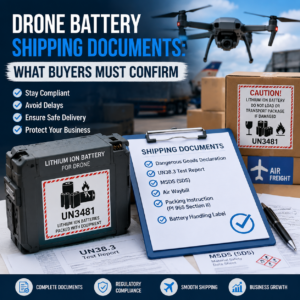
Despite the opportunity, the market is not without challenges. Regulatory changes can affect import eligibility and flight permissions. Tariffs and trade disputes can raise landed costs. Intellectual property concerns may affect brand reputation. Battery transport rules and certification standards can complicate logistics.
There is also the risk of commoditization. As lower-cost models flood the market, wholesalers must avoid racing to the bottom. Success increasingly depends on offering a curated product mix, dependable supply, and value-added services rather than simply moving units.
The Outlook for the Next Wave of Growth
The 2026 global drone wholesale market is best understood as a transition from product sales to ecosystem sales. Hardware remains the entry point, but the real value lies in the full stack: software, support, accessories, training, compliance, and fleet management. The 4.94 million export benchmark is a signal that the market has reached substantial scale, but it is also a starting point for deeper specialization.
For wholesalers, the opportunity is clear. Those who can align with industry-specific needs, manage supply chain complexity, and build long-term client relationships will be positioned to benefit from one of the most dynamic electronics categories in the world. As commercial drone use continues to broaden, the distributors who treat this market as a strategic business rather than a transactional one will be the ones most likely to capture its billion-dollar potential.



Add comment