
Buying your first drone can feel exciting and overwhelming at the same time. There are tiny toy models, camera drones, FPV drones, folding travel drones, and beginner-friendly kits with features that almost fly themselves. If you are new to the hobby, the goal is simple: choose a drone that is easy to learn on, safe to fly, and fun enough to keep you interested.
This beginner drone guide breaks down everything a new pilot needs to know. You will learn what features matter, what to avoid, how to practice safely, and how to make your first flights smoother and more enjoyable.
Table of Contents
- What Is a Beginner Drone?
- Why Start with a Beginner Drone?
- Types of Beginner Drones
- Features to Look for in a Beginner Drone
- What to Avoid as a Beginner
- How to Choose the Right Beginner Drone for You
- Basic Drone Controls Every Beginner Should Know
- First Flight Tips for Beginners
- Common Beginner Mistakes
- Safety and Legal Considerations
- How to Practice and Improve Quickly
- Beginner Drone Accessories Worth Considering
- How Much Should a Beginner Drone Cost?
- A Simple Beginner Drone Buying Checklist
- Example: Choosing the Right Drone for Different Beginners
- Conclusion
What Is a Beginner Drone?
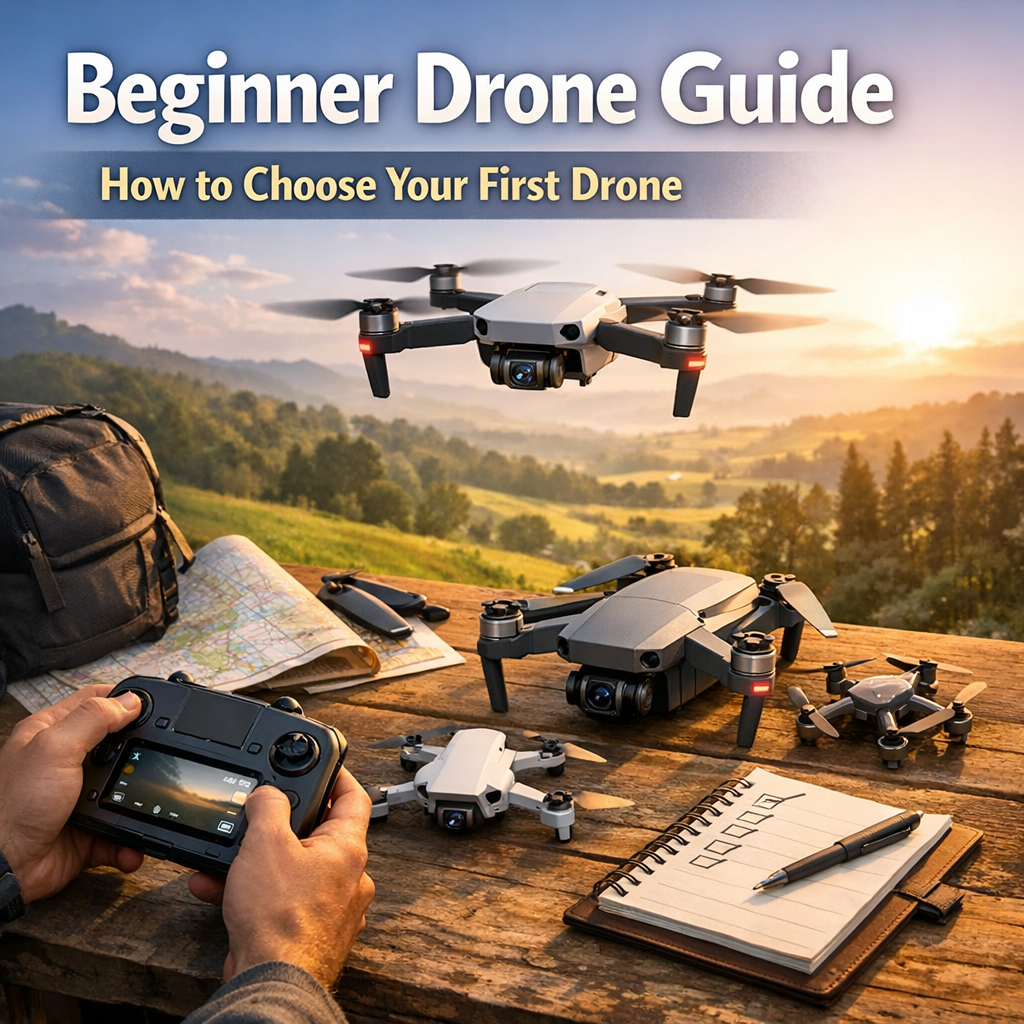
A beginner drone is a drone designed to be easier to fly, simpler to set up, and more forgiving when mistakes happen. These drones usually include features that help new pilots, such as:
- One-button takeoff and landing
- Altitude hold
- GPS stabilization
- Headless mode
- Return-to-home functions
- Built-in propeller guards
- Low-speed flight modes
A beginner drone does not need to be the cheapest drone on the shelf, and it does not need to be the most advanced. It just needs to be easy to control and durable enough to survive a few rough landings.
Why Start with a Beginner Drone?
Many first-time pilots assume they should buy a high-end model right away so they “won’t outgrow it.” In reality, a beginner drone often provides a better learning experience.
Easier to Learn
A beginner drone is usually stable in the air and responds predictably. That makes it easier to learn the basics of throttle, yaw, pitch, and roll without feeling constantly out of control.
Less Risky
Crashes happen. Beginner drones are typically smaller, lighter, and less expensive than advanced camera drones. If you make mistakes during the learning process, the damage is usually lower.
Better Confidence
When your drone stays steady and responds well to commands, you gain confidence faster. That matters because beginners often quit after a frustrating first few flights.
More Fun
A drone you can actually fly well is far more enjoyable than a complicated one that spends more time on the ground than in the air.
For readers who want to compare beginner-friendly camera options, our 4K Drone Buying Guide: 7 Smart Features is a useful next step.
Types of Beginner Drones
Not all beginner drones are the same. Understanding the main categories helps you choose the right one for your goals.
Toy Drones
Toy drones are the smallest and most affordable option. They are often designed for indoor use and short flight times.
Pros:
- Cheap
- Easy to replace if damaged
- Great for learning basic controls indoors
Cons:
- Short battery life
- Limited range
- Often lack cameras or GPS
Toy drones are a good starting point if you want to practice without spending much money.
Camera Drones
Camera drones are the most popular choice for beginners who want aerial photos or video. Many models include stabilized cameras and smart flight modes.
Pros:
- Better image quality
- GPS and safety features
- Great for outdoor flying and content creation
Cons:
- More expensive
- Can be more fragile
- Regulations may apply depending on weight and region
If you want to capture scenic shots or travel footage, a beginner camera drone is usually the best option.
FPV Drones
FPV stands for first-person view. These drones let you fly using goggles or a live camera feed from the drone’s point of view.
Pros:
- Exciting and immersive
- Popular for racing and freestyle flying
- Fast response and agile movement
Cons:
- Harder to learn
- Usually less stable for absolute beginners
- Crashes are more common and more costly
FPV drones are fun, but they are usually not the best starting point for someone who has never flown a drone before.
Mini Drones
Mini drones are compact drones that are often easy to carry and sometimes come with camera features. They can be a good compromise between toy drones and full-size camera drones.
Pros:
- Portable
- Often beginner-friendly
- Good for casual outdoor flying
Cons:
- More sensitive to wind
- Shorter flight time
- May have limited camera performance
Features to Look for in a Beginner Drone
The best beginner drone is not necessarily the one with the most impressive specs. It is the one with the right balance of stability, durability, and ease of use.
1. Stable Flight Control
Stability is one of the most important features for a beginner drone. Look for drones with:
- Altitude hold
- GPS positioning
- Optical flow sensors
- Automatic hover support
These features help the drone stay in place when you release the controls, which makes flying much easier.
2. Easy Controls
Some drones have beginner modes that reduce speed and limit how sharply the drone can move. These modes are extremely helpful when you are just starting out.
Look for:
- Low-speed mode
- Simplified controller layout
- Clear app interface
- Good instruction manual
3. Durability
A beginner drone should survive some bumps. Features that help include:
- Propeller guards
- Flexible frame
- Replaceable parts
- Crash-resistant design
Even if the drone is not indestructible, a tough frame can save you money and frustration.
4. Reasonable Flight Time
Many beginner drones offer around 10 to 30 minutes of flight time per battery. That range can vary depending on size, wind, camera use, and flying style.
A good beginner drone should have:
- At least one spare battery
- Fast charging or easy battery swapping
- Clear battery level indicators
5. Return-to-Home Function
GPS-equipped drones often have a return-to-home feature. If the battery gets low or the signal is lost, the drone can return to its takeoff point automatically.
This is especially useful for beginners because it reduces the chance of losing the drone.
6. Camera Quality, If Needed
If photography or video matters to you, look for a drone with:
- 1080p or better video
- Electronic or mechanical stabilization
- Adjustable camera angle
- Easy media transfer to your phone
Do not focus only on resolution. A shaky 4K video can be worse than a stable 1080p clip.
What to Avoid as a Beginner
Beginners often make the same purchasing mistakes. Avoiding these can save you time and money.
Overly Cheap No-Name Drones
Very cheap drones often look attractive online, but they may have poor controls, weak batteries, unreliable connections, and almost no support.
If a drone seems unbelievably inexpensive, check reviews carefully.
Large, Expensive Camera Drones Right Away
A high-end drone may be packed with features, but it can also be intimidating. If you crash an expensive model early on, replacement costs can be painful.
Drones Without Spare Parts
Propellers, batteries, and landing gear wear out. A beginner drone should have accessible replacement parts so you can keep flying.
Complex FPV Systems
Unless you are specifically interested in FPV, it is better to start with a stable camera drone or a simple practice drone.
How to Choose the Right Beginner Drone for You
The best beginner drone depends on what you want to do with it.
If You Want to Learn Pure Flying Skills
Choose a small, durable practice drone with propeller guards and simple controls. This is ideal for learning throttle and orientation without worrying about photography.
If You Want Aerial Photos and Video
Choose a beginner camera drone with GPS stabilization, return-to-home, and a decent camera. Make sure it has an easy app and straightforward takeoff and landing features.
If You Want Something for Indoor Use
Pick a small toy drone or mini drone that is safe to fly indoors. Look for low-speed settings and propeller guards.
If You Want a Hobby That Can Grow With You
Start with a beginner camera drone or a practice drone that teaches core skills. Once you are confident, you can move into FPV or a more advanced aerial photography setup.
Basic Drone Controls Every Beginner Should Know
Before your first flight, learn the four main movement controls. These are the foundation of drone flying.
Throttle
Throttle controls altitude. More throttle makes the drone rise; less throttle makes it descend.
Yaw
Yaw rotates the drone left or right without moving it forward or backward.
Pitch
Pitch tilts the drone forward or backward, causing it to move in that direction.
Roll
Roll tilts the drone left or right, causing it to move sideways.
When you combine these four controls, you can move the drone in almost any direction.
First Flight Tips for Beginners
Your first flight does not need to be complicated. A little preparation goes a long way.
Start in an Open Area
Choose a large, open space away from trees, buildings, people, power lines, and roads. A field or empty park area is ideal, as long as flying is allowed there.
Check the Weather
Avoid strong wind, rain, fog, or poor visibility. Small beginner drones are especially sensitive to wind.
Fully Charge the Battery
A partially charged battery can shorten your practice time and may affect performance.
Calibrate Before Flying
Many drones need calibration before their first flight or after moving to a new area. This helps ensure the compass and sensors work properly.
Use Beginner Mode
If your drone has a beginner or training mode, turn it on. It reduces speed and sensitivity, making the drone easier to manage.
Practice Hovering First
Hovering is one of the most important early skills. Learn to hold the drone in one spot before trying to fly in larger patterns.
Keep the Drone in Sight
Do not rely only on the screen or app. Always keep the drone within your line of sight when possible, especially as a beginner.
Common Beginner Mistakes
Most new drone pilots make a few predictable mistakes. Knowing them ahead of time helps you avoid frustration.
Flying Too High Too Soon
It is tempting to send the drone high into the sky right away, but that makes orientation harder. Start low and close.
Ignoring Wind
Even light wind can push a small drone around. Beginners sometimes think the drone is malfunctioning when it is actually fighting the wind.
Overcorrecting Controls
New pilots often move the sticks too much, causing the drone to jerk or drift. Try gentle, small inputs.
Forgetting Battery Limits
Do not wait until the battery is completely empty before landing. Many drones need reserve power for a safe return.
Flying Near Obstacles
Trees, walls, and power lines can be hard to see through the drone’s camera or from a distance. Keep plenty of clearance.
Skipping the Manual
Even simple drones have features worth learning. A quick read of the manual can prevent avoidable mistakes.
Safety and Legal Considerations
Flying a drone is a fun hobby, but it also comes with responsibilities. Rules vary depending on where you live, but the general principles are similar.
Know Local Drone Laws
Some areas require registration, training, or special permission for certain drones. Others restrict flying near airports, crowds, or government buildings. For official guidance, review the FAA’s Unmanned Aircraft Systems resource.
Respect Privacy
Do not fly over private property or record people without permission. A good pilot respects the privacy of others.
Stay Away from Airports
Aircraft and drones do not mix. Keep your drone well away from airports and any restricted airspace.
Fly Responsibly Around Pets and Wildlife
Loud drone noise can scare animals. Avoid disturbing birds, livestock, and pets.
Use Common Sense
If something feels unsafe, do not fly. Good judgment matters as much as technical skill.
How to Practice and Improve Quickly
The fastest way to become better is to practice in short, focused sessions.
Practice One Skill at a Time
Instead of trying to do everything at once, break practice into parts:
- Takeoff and landing
- Hovering
- Slow forward movement
- Gentle turning
- Figure-eight patterns
- Controlled side movement
Use Short Flights
Ten-minute practice sessions can be more effective than one long, stressful flight. Short sessions help you stay focused.
Repeat the Same Exercise
Repetition builds muscle memory. Try hovering in the same spot or flying a slow square pattern several times.
Learn How the Drone Reacts
Every drone feels a little different. Spend time understanding how quickly it responds, how it behaves in wind, and how stable it remains.
Review Footage and Flight Behavior
If your drone records video or logs data, review it after each flight. You may notice drifting, wobbling, or control habits that need improvement.
Beginner Drone Accessories Worth Considering
A few accessories can make your experience easier and safer.
Extra Batteries
One battery is never enough if you want meaningful practice. Extra batteries let you fly longer without waiting.
Spare Propellers
Propellers can bend or break during minor crashes. Having replacements on hand is smart.
Carrying Case
A case protects the drone and makes it easier to transport.
Propeller Guards
These are especially useful for indoor flights and close-quarter practice.
Memory Card
If your drone records video, a good memory card ensures smoother storage and easier downloads.
Landing Pad
A portable landing pad keeps dust, grass, and debris away from the drone during takeoff and landing.
How Much Should a Beginner Drone Cost?
Prices vary widely, but it helps to think in ranges.
Under $100
This range usually includes toy drones and very basic practice models. These can be fine for learning controls indoors or in calm spaces.
$100 to $300
This is often the sweet spot for beginners who want better stability, decent cameras, and helpful features without spending too much.
$300 to $700
This range can include stronger beginner camera drones with GPS, improved flight time, and better image quality.
Over $700
This is usually where more advanced drones begin to appear. Beginners can use them, but they may not be the best first choice unless you are committed to aerial photography and comfortable with a learning curve.
A Simple Beginner Drone Buying Checklist
Before you buy, ask yourself these questions:
- Is it easy to fly?
- Does it have beginner-friendly stabilization?
- Is it durable enough for mistakes?
- Are replacement parts available?
- Does it have enough battery life?
- Do I want a camera or just flying practice?
- Is it legal to fly in my area?
- Does it include helpful safety features?
If the answer to most of these is yes, you are probably looking at a solid beginner drone.
Example: Choosing the Right Drone for Different Beginners
Here are three common beginner profiles and what they might need.
The Casual Hobbyist
You want to fly for fun on weekends and maybe take a few photos. A compact beginner camera drone with GPS and return-to-home is probably ideal.
The Indoor Learner
You mainly want to practice basic controls at home. A small toy drone with propeller guards and low-speed mode is the best fit.
The Future Content Creator
You want to learn drone flying while also making videos. A mid-range beginner camera drone with stabilization, decent battery life, and easy app controls makes sense.
Conclusion
A beginner drone should make flying easier, not more stressful. The best first drone is usually stable, durable, easy to control, and suited to your goals—whether that means indoor practice, casual outdoor flying, or aerial photography.
Start simple, learn the basics, and practice safely in open spaces. With the right beginner drone and a little patience, you can build confidence quickly and enjoy one of the most rewarding hobbies around.
If you want to explore real products after reading this beginner drone guide, the H47 S11 Dual Camera Drone is a practical example of a beginner-friendly option with useful flight features.
Add comment