
Introduction
In recent years, drones have moved far beyond hobbyist toys. Today, they are powerful tools that help businesses save time, cut costs, and improve safety. If you work in industries like farming, construction, or energy, you have probably heard about drones but might wonder: “How exactly can they help my business?” This article explores the most common industrial drone applications in different industries.
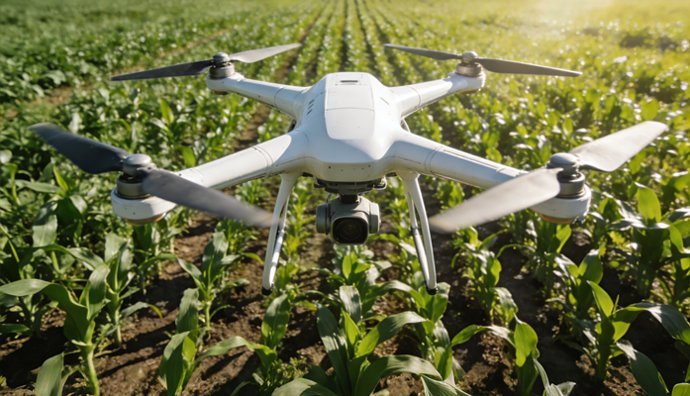
- Drones in Agriculture
Farming is one of the fastest‑growing fields for drone use. Farmers now use drones to monitor crop health, spot pests, and even spray fertilisers.
Crop monitoring – Multispectral cameras on drones can show which parts of a field need more water or nutrients.
Precision spraying – Instead of treating an entire field, drones target only the areas that need treatment, reducing chemical use and costs.
Livestock tracking – Thermal cameras help farmers find lost animals or check herd health without walking miles.
With these applications, farmers can increase yields while spending less on labour and resources.
- Drones in Construction and Infrastructure
Construction sites are busy, often dangerous places. Drones bring a bird’s‑eye view that makes planning and inspection safer and faster.
Site surveying – A drone can map a large area in minutes, creating accurate 3D models that engineers use for design.
Progress monitoring – Project managers fly drones weekly to compare actual construction with blueprints, spotting delays early.
Bridge and building inspection – Instead of scaffolding or cherry pickers, inspectors use drones with high‑zoom cameras to check cracks or rust on tall structures.
Using drones reduces human risk and speeds up documentation.
- Drones in Energy and Utilities
Power lines, wind turbines, and solar farms stretch over huge areas. Inspecting them manually is slow and expensive. Drones change that.
Power line inspection – Drones fly along lines, detecting broken insulators or vegetation that could cause outages.
Wind turbine checks – A drone can hover near turbine blades to capture detailed images, eliminating the need for workers to climb.
Solar panel monitoring – Thermal cameras on drones identify overheating panels, allowing quick repairs and maintaining efficiency.
Energy companies save millions by catching problems early with drone data.
- Drones for Public Safety and Emergency Response
Police, fire departments, and search‑and‑rescue teams increasingly rely on drones.
Search and rescue – Thermal drones find missing people in forests or mountains at night, covering ground much faster than foot teams.
Firefighting – Drones give commanders a real‑time view of a wildfire’s spread, helping them deploy crews more effectively.
Crime scene documentation – Aerial photos provide a complete record without disturbing evidence.
In emergencies, every minute counts – drones help responders act faster.
- Drones in Mining and Aggregates
Mines are vast, dangerous environments. Drones improve safety and efficiency.
Stockpile volume measurement – Instead of walking on loose piles, surveyors fly drones to calculate material volumes accurately.
Blast monitoring – Drones can safely record blast zones before and after detonation, helping engineers optimise explosions.
Haul road inspection – Regular drone flights detect road damage early, preventing truck accidents.
Mining companies using drones report fewer injuries and better production planning.
- Why Businesses Choose Drones – The Main Benefits
Across all industries, drones offer three big advantages:
Safety – Keep workers away from dangerous heights, toxic areas, or unstable ground.
Speed – Cover large areas in hours instead of days.
Cost – Reduce the need for heavy machinery, scaffolding, or manual labour.
Plus, the data drones collect (photos, videos, thermal images) is easy to store and share with teams.
- Future Trends in Industrial Drones
The technology is evolving fast. Here is what we can expect in the next few years:
Longer flight times – Better batteries and hybrid engines will let drones stay airborne for hours.
AI‑powered analysis – Drones will automatically detect problems (like a broken insulator) without waiting for a human to review footage.
Swarm technology – Multiple drones working together can cover even larger areas in sync.
As drones become smarter, their industrial applications will keep growing.
Conclusion
Whether you are a farmer, a construction manager, or an energy engineer, there is a drone application that can make your job easier. The examples above show just a few of the many ways industrial drone applications in different industries are already delivering real value. If you are considering adding drones to your operations, start by identifying a single task that takes too much time or risk – and then explore how a drone could handle it.
At Droneso, we specialise in providing enterprise‑grade drones and components tailored to your industry. Contact our team to discuss how we can support your next project.